

Home / Environment / Phoenix's Feathered Romantics: Largest Lovebird Colony Outside Africa
Phoenix's Feathered Romantics: Largest Lovebird Colony Outside Africa
14 Feb
Summary
- Phoenix hosts the largest lovebird colony outside their native Africa.
- These parrots survive by staying close to humans and air conditioning.
- Lovebirds form lifelong bonds, displaying affection through shared food.
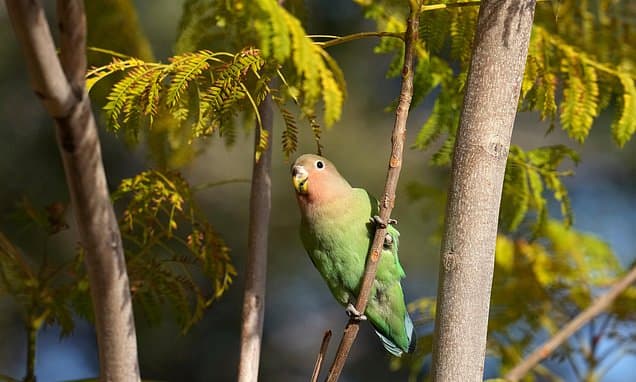
Phoenix, Arizona, has become an unexpected sanctuary for rosy-faced lovebirds, boasting what is believed to be the largest colony of these birds outside of their native arid regions in southwestern Africa. These small parrots, originating from areas like the Namib Desert, are thought to be descendants of pet birds that have established a thriving population, estimated at around 2,000 individuals.
The lovebirds' survival in Phoenix's sweltering climate is attributed to their ability to adapt by staying close to human habitation. They are frequently observed roosting in trees and even seeking refuge near air conditioning vents on hot days, demonstrating remarkable resilience.
Beyond their adaptability, rosy-faced lovebirds are renowned for forming deep, lifelong romantic bonds. Unlike many bird species, they are highly devoted to their mates, engaging in mutual preening and courtship feeding. This devoted behavior, which includes sharing regurgitated food, is a hallmark of their species and a significant aspect of their appeal.
While Phoenix hosts the most prominent colony, other established populations of rosy-faced lovebirds exist in Hawaii, and a different species, Fischer's lovebirds, have a small colony in Portugal. These birds typically live for about 20 years, longer than many smaller songbirds, and their strong pair bonds are a defining characteristic.