Home / Environment / Bees Granted Legal Rights in Amazon
Bees Granted Legal Rights in Amazon
14 Mar
Summary
- Stingless bees in Peru's Amazon now have legal rights.
- Ordinances grant bees rights to exist and thrive.
- Community involvement led to legal protections for bees.

In a groundbreaking development for environmental law, stingless bees in Peru's Amazonian rainforests have been granted legal rights, making them the first insects globally to receive such protections. This initiative, primarily centered in the Satipo and Nauta municipalities, aims to shield these crucial pollinators from threats like deforestation and pesticide use. The ordinance within the Avireri-Vraem Biosphere Reserve provides enforceable safeguards for the bees.
Spearheaded by chemical biologist Rosa Vásquez Espinoza and supported by Asháninka communities, the legislation recognizes stingless bees as rights-bearing subjects. These native bees are essential for pollinating over 80% of rainforest plants in Peru. Their decline significantly impacts seed production and vital crops like cacao and coffee.
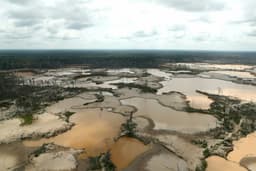
The legal push was deeply influenced by the cultural significance of meliponiculture for indigenous groups like the Asháninka and Kukama-Kukamiria, for whom bee products serve as food and medicine. Over half of the bees' habitats are at risk from deforestation and illegal logging, with hollow trees crucial for their nests disappearing.
Satipo's ordinance establishes the "inherent" rights for bees to exist, maintain populations, and survive in protected environments. It also allows for legal standing for their defenders when colonies or foraging areas are threatened. This precautionary approach mandates reforestation and hive relocation over destruction.
As of the ordinance's implementation, over 650 locals, predominantly women and youth, contributed to creating 11 sanctuaries spanning 74 acres, protecting an estimated 22 million bees. Peru's national Law No. 32235, enacted in 2025, initially recognized these bees, though local protections face challenges from cross-border threats.