Home / Environment / Tiny Partula Snails' Epic Comeback After Near Extinction
Tiny Partula Snails' Epic Comeback After Near Extinction
11 Mar
Summary
- A global zoo alliance is reintroducing Partula snails to French Polynesia.
- Carnivorous snails introduced in the 1970s devastated native species.
- Partula snails are vital for forest health and scientific study.
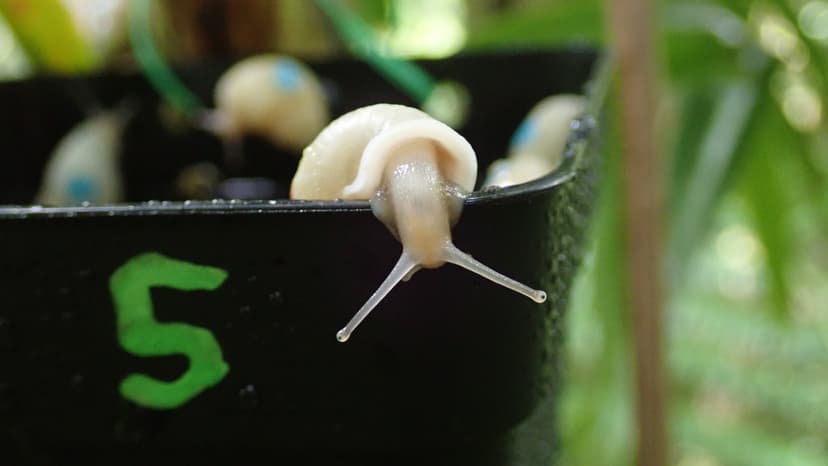
Partula snails, once abundant in French Polynesia, faced near extinction following the introduction of a predatory foreign snail in the 1970s. This invasive species, intended to control another pest, ruthlessly preyed upon the native Partulas, causing a catastrophic decline. By 1994, 43 out of 61 native snail species were lost.
Beginning in 1991, a coalition of 15 zoos worldwide, spearheaded by the Zoological Society of London, initiated a pioneering captive breeding and reintroduction program. This initiative has successfully returned over 30,000 Partula snails, including species once thought extinct, to predator-proof reserves across islands like Mo'orea and Tahiti.
These small tree snails are scientifically significant, offering parallels to Darwin's finches for studying evolution driven by isolation. Their ecological role in clearing forest fungi is also critical for nutrient cycling and overall forest health. Recent successes include the discovery of wild-born Partula tohiveana and Partula varia, signaling a promising natural repopulation of their native habitats.