Home / Environment / Ancient Ice Wisdom Fights Pakistan's Water Crisis
Ancient Ice Wisdom Fights Pakistan's Water Crisis
18 Feb
Summary
- Glacier grafting is a traditional technique to create artificial glaciers.
- The practice dates back to the 14th century, revived to combat water scarcity.
- Climate change and conflict threaten this ancient water management method.
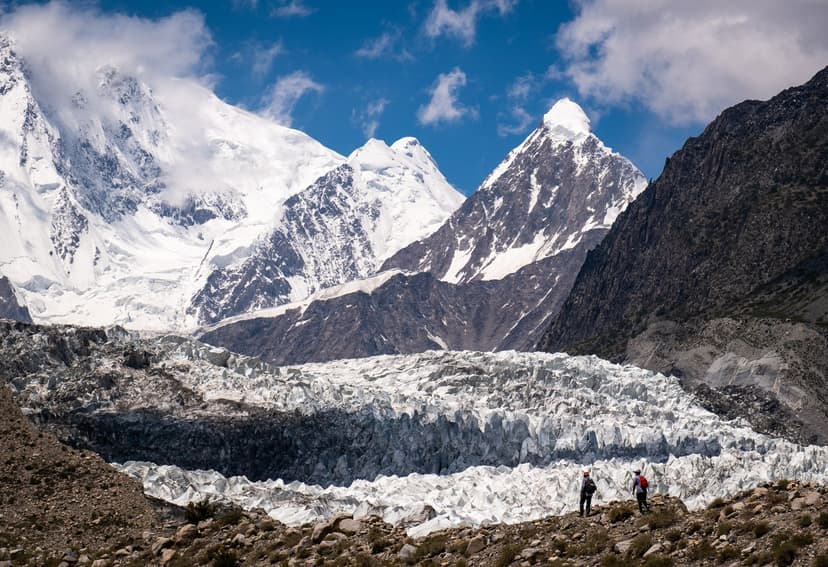
In Pakistan's high-altitude Himalayan region, residents are reviving glacier grafting, an ancient technique to address water scarcity exacerbated by rising global temperatures. This traditional practice, known locally as glacier marriage, involves carefully "planting" ice at strategic high-altitude locations to form artificial glaciers, a method with roots stretching back to the 14th century.
The technique requires sourcing "male" and "female" ice from different locations, mixed with specific materials like coal, grass, salt, and water from seven streams. Strict spiritual rituals and environmentally respectful practices are observed throughout the process, emphasizing cultural and ecological responsibility.
Glacier grafting, which can start supplying water within two decades, offers a long-term solution for water security. However, experts warn that the process is vulnerable to climate change, lack of snowfall, and even conflict, particularly in regions like Kashmir where military activity poses a threat.
This vital Indigenous knowledge faces further challenges as younger generations are drawn to urban centers, leading to a potential loss of this critical practice. The rapid disappearance of glacier grafting disrupts the intergenerational transfer of knowledge crucial for survival in the mountains.