feedzop-word-mark-logo
searchLogin
Feedzop
homeFor YouUnited StatesUnited States
You
bookmarksYour BookmarkshashtagYour Topics
Trending
Terms of UsePrivacy PolicyAboutJobsPartner With Us

© 2026 Advergame Technologies Pvt. Ltd. ("ATPL"). Gamezop ® & Quizzop ® are registered trademarks of ATPL.

Gamezop is a plug-and-play gaming platform that any app or website can integrate to bring casual gaming for its users. Gamezop also operates Quizzop, a quizzing platform, that digital products can add as a trivia section.

Over 5,000 products from more than 70 countries have integrated Gamezop and Quizzop. These include Amazon, Samsung Internet, Snap, Tata Play, AccuWeather, Paytm, Gulf News, and Branch.

Games and trivia increase user engagement significantly within all kinds of apps and websites, besides opening a new stream of advertising revenue. Gamezop and Quizzop take 30 minutes to integrate and can be used for free: both by the products integrating them and end users

Increase ad revenue and engagement on your app / website with games, quizzes, astrology, and cricket content. Visit: business.gamezop.com

Property Code: 5571

Home / Environment / Ocean's Red Tide: A Climate Fix or Risky Experiment?

Ocean's Red Tide: A Climate Fix or Risky Experiment?

8 Jan

•

Summary

  • Scientists dyed a section of the Gulf of Maine red with lye for a climate experiment.
  • Ocean acidification threatens marine life and one billion people's livelihoods.
  • Geoengineering may be necessary, but safety and effectiveness questions remain.
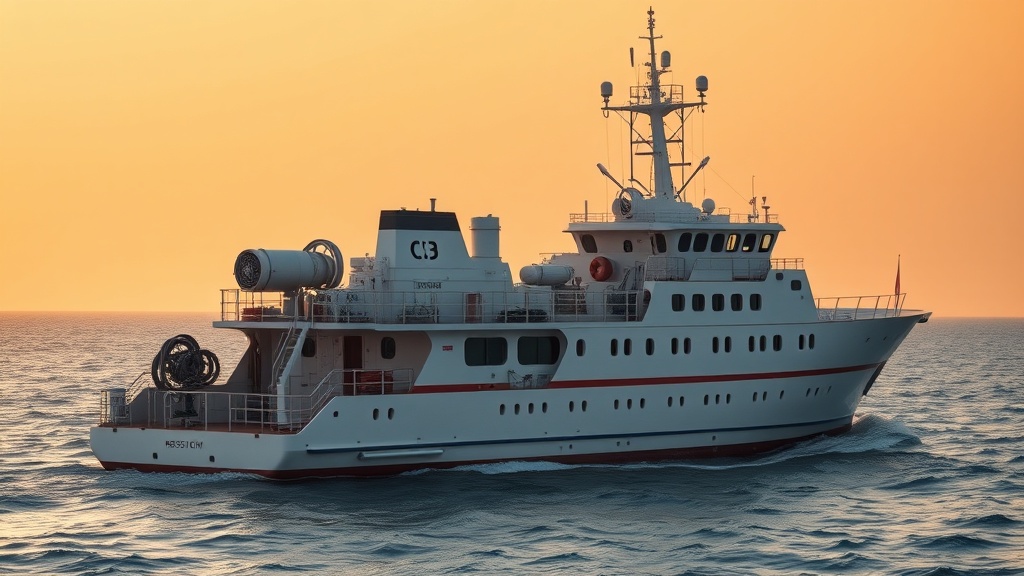
Ocean's Red Tide: A Climate Fix or Risky Experiment?

In a groundbreaking, albeit controversial, experiment, scientists intentionally dyed a section of the Gulf of Maine red using sodium hydroxide, commonly known as lye. This action was part of a study on ocean alkalinity enhancement, a geoengineering approach aimed at mitigating climate change impacts.

The oceans have absorbed a significant portion of human-emitted carbon dioxide, but this has led to widespread acidification, threatening marine ecosystems and the livelihoods of over a billion people. Ocean alkalinity enhancement seeks to create "antacids for the sea" to increase its capacity to absorb atmospheric carbon.

While experts agree emissions reductions are paramount, they also suggest such interventions may be necessary to prevent catastrophic warming. The Gulf of Maine experiment, led by Adam Subhas of the Woods Hole Oceanographic Institution, focused on quantifying carbon uptake. Despite assurances of safety, the method raises concerns about unintended consequences and the scale of potential deployment.

Disclaimer: This story has been auto-aggregated and auto-summarised by a computer program. This story has not been edited or created by the Feedzop team.
Scientists dyed a section of the Gulf of Maine red with lye as part of an experiment to test ocean alkalinity enhancement, a method to increase the ocean's capacity to absorb carbon dioxide.
Ocean acidification, caused by the absorption of CO2, disrupts marine life's physiology, threatening shelled organisms and the foundation of ocean food webs. This impacts fisheries vital to over a billion people.
While the Woods Hole experiment was deemed safe, large-scale alkalinity enhancement carries risks of supersaturating seawater, unintended chemical reactions, and unknown long-term effects on marine ecosystems and food webs.

Read more news on

Environmentside-arrow
trending

CFTC modernizes crypto regulations

trending

Artemis II rocket on pad

trending

Earthquake near Elgin, SC

trending

Jerusalem daycare babies dead

trending

Apple TV service disruption

trending

Luka Doncic All-Star starter

trending

Texas winter storm watch

trending

Milwaukee winter weather advisory

trending

Mets acquire Luis Robert Jr.

You may also like

Sargassum Blooms: A Billion-Dollar Coastal Threat

16 Jan • 20 reads

article image

Toxic Plastic Beads Spill on Beach: Ban Urged

11 Dec, 2025 • 200 reads

article image

Ocean Floor Biodiversity Collapses After Mining Test

11 Dec, 2025 • 203 reads

article image

Southern Water Tackles Biobeads Wash-Up Crisis

28 Nov, 2025 • 290 reads

article image

Carnivorous 'Death Ball' Sponge Discovered in Antarctic Depths

10 Nov, 2025 • 290 reads

article image