Home / Environment / Ocean Acidification: A New Danger for Sharks
Ocean Acidification: A New Danger for Sharks
16 Jan
Summary
- Ocean acidification weakens shark teeth, increasing breakage risk.
- Acidic waters damage shark teeth, causing corrosion and structural degradation.
- Sharks face new threats from ocean chemistry changes beyond overfishing.
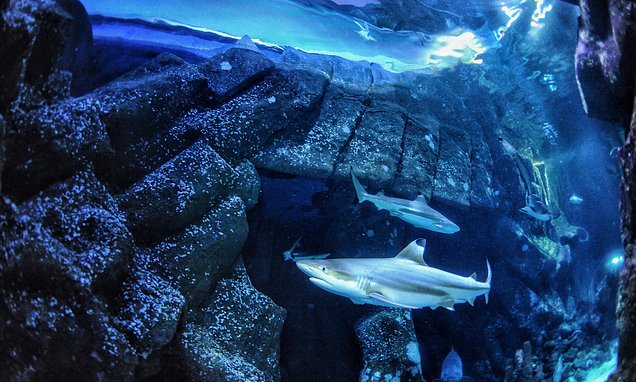
Sharks, renowned for their continuously regenerating teeth, face a new peril from the changing chemistry of the oceans. A study by German scientists indicates that increased ocean acidity, linked to burning fossil fuels, can lead to weaker, more brittle teeth, increasing their likelihood of breaking. This poses a risk to sharks' status as apex predators.
Researchers exposed blacktip reef shark teeth to projected acidity levels for the year 2300, observing significant damage, including cracks, holes, and root corrosion. These teeth, crucial for hunting and population regulation, are not designed to resist acidic conditions. While teeth are initially protected within mouth tissues, long-term exposure is a concern.
Despite this new threat, scientists note that sharks' long evolutionary history suggests adaptability. However, concerns remain that ocean acidification, alongside overfishing and pollution, could push some shark species closer to extinction. The study underscores the broad ecological impacts, also noting potential harm to shellfish.