Home / Environment / Nuclear Power: Clean Energy or Climate Risk?
Nuclear Power: Clean Energy or Climate Risk?
1 Sep
Summary
- Nuclear energy is low carbon but has significant embodied carbon and waste disposal costs.
- Climate change impacts nuclear power reliability due to water scarcity for cooling.
- Europe's grid faces 'Hellbrise' challenges, amplified by nuclear's inflexibility.
Calls to bolster nuclear power in Europe are growing, particularly after the war on Iran and its ensuing energy crisis. However, experts caution that new nuclear capacity may not solve current energy challenges, urging a closer look at its risks.
Nuclear energy is often labeled 'clean' due to its low carbon emissions during generation. Yet, the reality includes substantial embodied carbon from construction, uranium mining's carbon footprint, and the ongoing costs of waste disposal and decommissioning. This complex lifecycle challenges its 'clean' moniker.
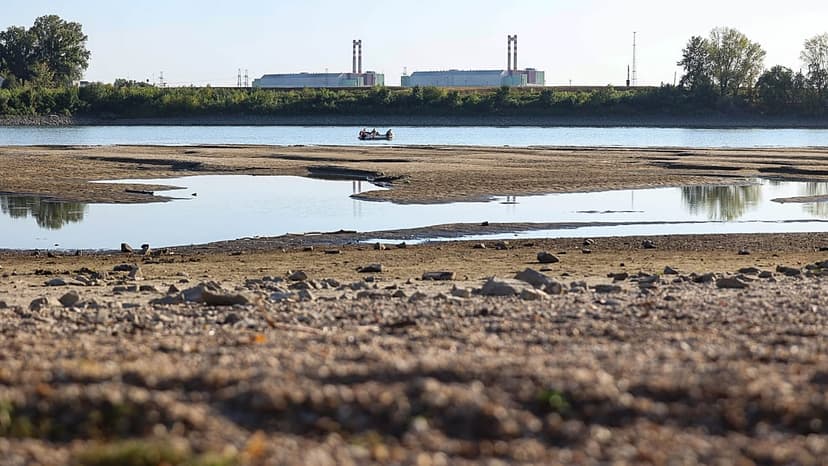
Climate change presents further concerns for nuclear power plants. This past summer's heatwaves, intensified by climate change, led to record-low river levels. This scarcity of water, crucial for nuclear cooling, forced several plants in France, Hungary, and Romania to reduce output or shut down temporarily.
The European Union generated 652 TWh from nuclear in the last year, comprising 23.3% of its total electricity mix, with France being the largest contributor. Despite its significant output, intermittent renewables like solar and wind saw increased output during heatwaves, outperforming nuclear in some instances.
Concerns also surround Europe's energy grid, which struggles with 'Hellbrise' – a situation where electricity demand outstrips supply on sunny, windy days, leading to wasted energy and negative prices. Nuclear power plants, being slow and costly to turn off, can amplify this challenge rather than solve it. Battery energy storage systems (BESS) are seen as a crucial technology to manage renewable intermittency.
While Germany has phased out nuclear power, other EU nations like France, Spain, and Sweden remain heavily reliant. The interconnectedness of European grids means countries without nuclear power can import it, highlighting the complex energy landscape across the bloc.


