Home / Environment / NY's Solar Goals: Tough Land Choices Ahead
NY's Solar Goals: Tough Land Choices Ahead
5 Jun
Summary
- New York aims for 46 GW of solar by midcentury.
- Solar energy requires significant land, impacting agriculture and forests.
- Dual-use solar approaches like agrivoltaics offer solutions.
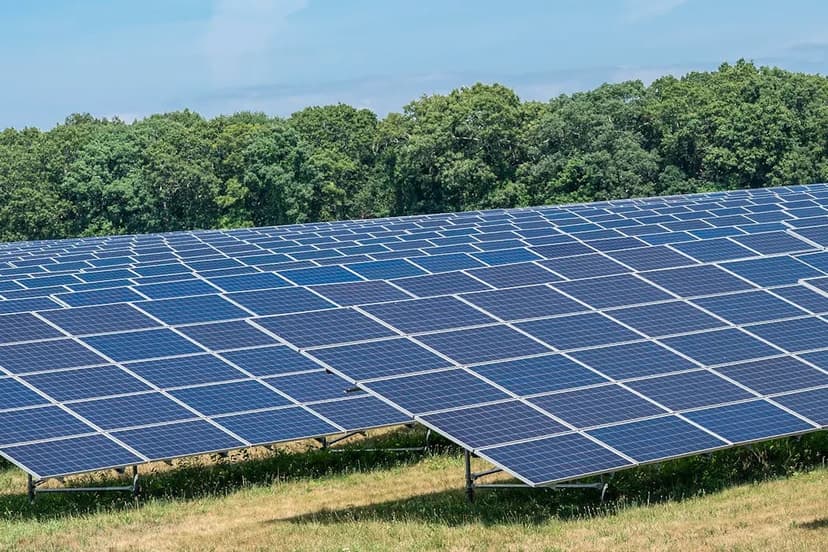
New York State is on track to potentially achieve its goal of 46 gigawatts of large-scale solar power by midcentury. However, realizing this ambition necessitates difficult decisions regarding land use across the state. The expansion of solar energy, while crucial for transitioning away from fossil fuels, demands considerable land area compared to traditional power plants.
This land-intensive nature of solar power presents a dilemma. Developing solar projects on agricultural land, like pastures and hay fields, could threaten New York's important dairy and broader agricultural economy. Conversely, protecting farmland may push development towards existing forests, which are vital carbon sinks and support biodiversity. This creates a complex trade-off where prioritizing one land use inevitably shifts development pressure to another.
The U.S. is seeing rapid growth in solar energy, with substantial new capacity expected online soon. This growth, while positive for reducing carbon emissions, requires millions of acres of repurposed land. For instance, a 100-megawatt solar project can occupy around 417 acres. The upcoming expansion will demand over 320,000 acres, displacing significant farmland, forests, and wetlands.
Dual-use strategies offer promising alternatives to mitigate these conflicts. Agrivoltaics integrates crop cultivation or livestock grazing with solar panel installations. Ecovoltaics designs solar projects to simultaneously support ecosystems, such as providing pollinator habitats. Floating solar panels on water bodies present another innovative approach. These methods highlight that expanding renewable energy does not have to come at a significant environmental cost.


