Home / Environment / NC Coastline: Homes vs. Beaches Battle Heats Up
NC Coastline: Homes vs. Beaches Battle Heats Up
6 Jul
Summary
- North Carolina faces severe oceanfront erosion, threatening homes and economies.
- A ban on hardened structures like seawalls is debated for its effectiveness.
- A draft report offers guidance on the state's four-decade-old construction ban.
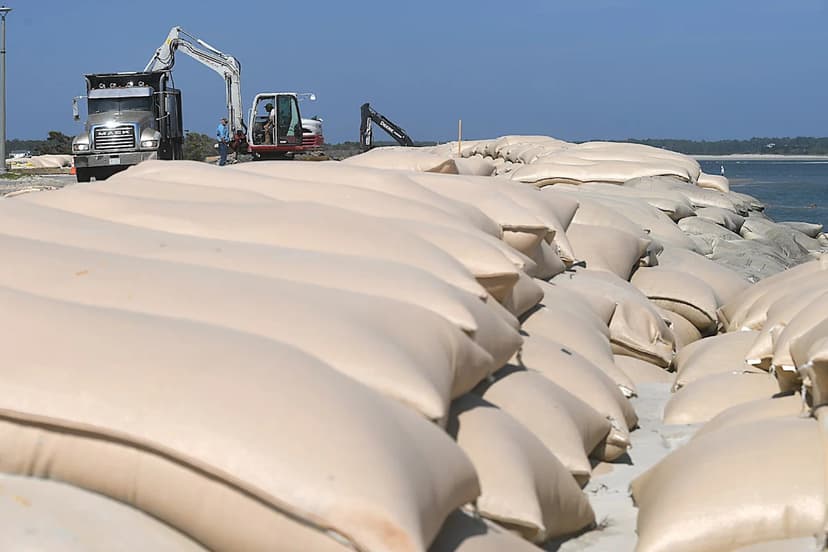
North Carolina's 320 miles of coastline are experiencing significant erosion, posing a threat to homes, infrastructure, and coastal economies. This has intensified the debate surrounding the state's long-standing ban on hardened structures such as seawalls and jetties. Coastal officials often cite this ban, even with recent softenings, as a primary reason for their limited options beyond expensive beach nourishment projects.
Conversely, environmentalists argue that the prohibition preserves the natural character of North Carolina's beaches and highlights areas unsuitable for development. They also contend that hardened structures can exacerbate erosion elsewhere along the coast. The N.C. Coastal Resources Commission's Science Panel released a draft report in June 2026, intending to provide neutral guidance to regulators and policymakers grappling with this contentious issue.
The state's current oceanfront construction rules are largely based on a 30-year setback, a policy established when environmental conditions and structure longevity were different. Climate change has led to more powerful storms and increased sea-level rise, projected to be a foot or more by 2050. This has resulted in structures, including over 30 homes in Rodanthe and Buxton since 2020, collapsing into the sea.
In response to mounting pressure, the science panel examined various shoreline management techniques. Their report cautions that hardening shorelines can lead to beach narrowing and eventual disappearance in front of structures, while also "starving" downdrift areas of sand. However, the panel acknowledged that shoreline stabilization could offer economic benefits. They recommend a cautious approach to expanding hardened structures, advocating for comprehensive assessments of physical, ecological, recreational, and economic consequences before any policy changes.
Legislative efforts are also underway, with Senate Bill 1009 proposing to lift the state's ban on hardened structures. Proponents argue that current policies do not align with the current coastal realities, and while natural approaches like beach nourishment and dune systems are favored, more immediate solutions are sometimes necessary. Beach nourishment is costly, with recurring expenses, and finding suitable sand can be challenging.
Critics of hardened structures, including environmental advocates, point out that they can create "winners and losers" by shifting sand away from other areas and can negatively impact habitats for wildlife. Science panel member Greg "Rudi" Rudolph stated there is no single "magic bullet," emphasizing that effective long-term solutions likely require combining various tools, such as groins and periodic nourishment, while carefully considering the trade-offs involved.


