

Home / Environment / Mumbai Mandates C&D Waste Segregation: New SOP Enforced
Mumbai Mandates C&D Waste Segregation: New SOP Enforced
25 Apr
Summary
- Developers must segregate waste into excavation and debris.
- Non-compliance faces penalties up to Rs 25,000 per vehicle.
- Vehicle tracking systems are now mandatory for C&D waste transporters.
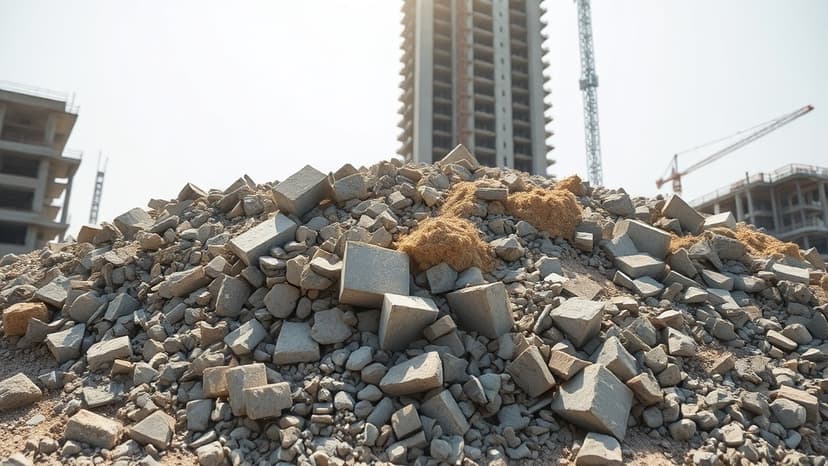
Mumbai's Brihanmumbai Municipal Corporation (BMC) has implemented a new Standard Operating Procedure (SOP) to regulate construction and demolition (C&D) waste management. This measure addresses the significant increase in redevelopment projects across the city.
The SOP mandates that all developers, contractors, and government bodies must segregate waste at the source into two distinct categories: excavation material and construction debris. Mixing these categories is strictly prohibited, with waste generators held accountable for any violations.
Penalties for non-compliance are substantial, reaching up to Rs 25,000 per vehicle for each infraction, with escalated actions for repeat offenders. To enhance transparency and control, all transporters of C&D waste must install vehicle tracking and monitoring systems (VTMS) for real-time oversight. Vehicles without active tracking devices will be denied access to disposal sites.
Furthermore, all projects, irrespective of their processing through the AutoDCR system, must submit a detailed Waste Management Plan (WMP). Disposal is restricted to authorized recycling facilities or designated sites like Deonar, with transportation of waste outside city limits forbidden. For large government and infrastructure projects, a security deposit or bank guarantee, whichever is higher, of Rs 25 lakh or 0.1% of project cost is now required.
The BMC operates two C&D waste recycling plants with a combined daily capacity of 1,200 tons. The new framework also encourages the reuse of excavation material within city projects to foster a circular economy, with materials at Deonar being repurposed for backfilling and infrastructure works.

