Home / Environment / Mount Rainier Meadows Reborn by Helicopter
Mount Rainier Meadows Reborn by Helicopter
5 Aug
Summary
- Helicopters airlifted young plants to restore damaged Mount Rainier meadows.
- Over 90% of transplanted native plants survived in harsh alpine conditions.
- Visitor foot traffic had previously damaged fragile meadows and exposed soil.
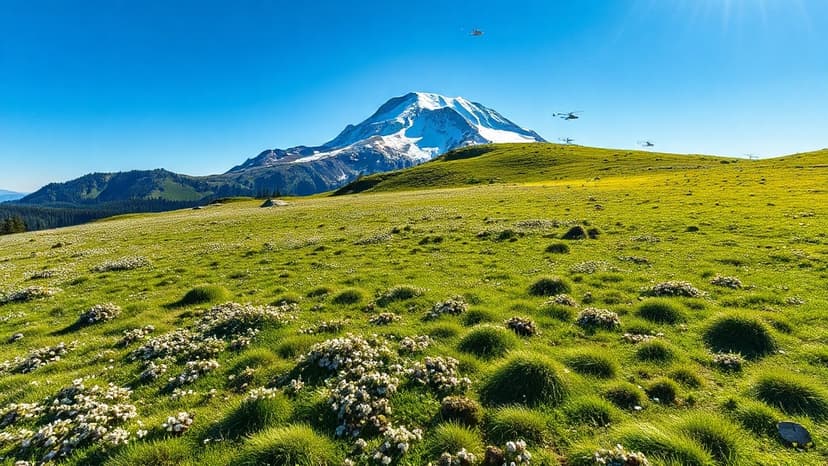
Helicopters recently delivered young native plants to damaged meadows at Mount Rainier as part of a vital ecosystem restoration. These subalpine landscapes had suffered significant degradation from repeated visitor foot traffic, which stripped away vegetation and exposed delicate soil.
The restoration program, scaled up significantly in 2011, involved growing approximately 85,000 native plants. Tens of thousands were then planted in affected areas around Paradise and Sunrise. Helicopters proved essential for transporting these plants to remote restoration sites, proving much more practical than hand-carrying them over difficult terrain.
These efforts have yielded impressive results, with over 90% of the transplanted plants surviving. This success demonstrates the effectiveness of intensive restoration in repairing fragile mountain ecosystems. The key challenge remains preventing future damage to these recovering areas, especially as changing snowmelt patterns might increase exposure to visitors.
Mount Rainier's meadows, particularly around Paradise and Sunrise, are highly susceptible to damage from off-trail use, camping, and shortcuts. Decades of research have documented how visitor activity can compact soil, harm plants, and lead to erosion, making regrowth difficult. Early restoration programs, starting in the 1980s, focused on stabilizing ground and reintroducing native vegetation.


