feedzop-word-mark-logo
searchLogin
Feedzop
homeFor YouUnited StatesUnited States
You
bookmarksYour BookmarkshashtagYour Topics
Trending
trending

Albino alligator Claude dies at 30

trending

College Football Playoff rankings reveal

trending

Duke defeats Florida, stays perfect

trending

Timberwolves edge Pelicans in OT

trending

Rupee crosses 90 against USD

trending

Thunder beat Warriors without Curry

trending

UConn defeats Kansas

trending

North Carolina defeats Kentucky

trending

USC Trojans defeat Oregon

Terms of UsePrivacy PolicyAboutJobsPartner With Us

© 2025 Advergame Technologies Pvt. Ltd. ("ATPL"). Gamezop ® & Quizzop ® are registered trademarks of ATPL.

Gamezop is a plug-and-play gaming platform that any app or website can integrate to bring casual gaming for its users. Gamezop also operates Quizzop, a quizzing platform, that digital products can add as a trivia section.

Over 5,000 products from more than 70 countries have integrated Gamezop and Quizzop. These include Amazon, Samsung Internet, Snap, Tata Play, AccuWeather, Paytm, Gulf News, and Branch.

Games and trivia increase user engagement significantly within all kinds of apps and websites, besides opening a new stream of advertising revenue. Gamezop and Quizzop take 30 minutes to integrate and can be used for free: both by the products integrating them and end users

Increase ad revenue and engagement on your app / website with games, quizzes, astrology, and cricket content. Visit: business.gamezop.com

Property Code: 5571

Home / Environment / Fungi: Minnesota's Tiny Heroes Against Ash Borers

Fungi: Minnesota's Tiny Heroes Against Ash Borers

3 Dec

•

Summary

  • Certain fungi found in Minnesota can kill the invasive emerald ash borer.
  • Autodissemination devices trap beetles and coat them with fungus spores.
  • Researchers are testing four fungal strains in state parks and forests.
Fungi: Minnesota's Tiny Heroes Against Ash Borers

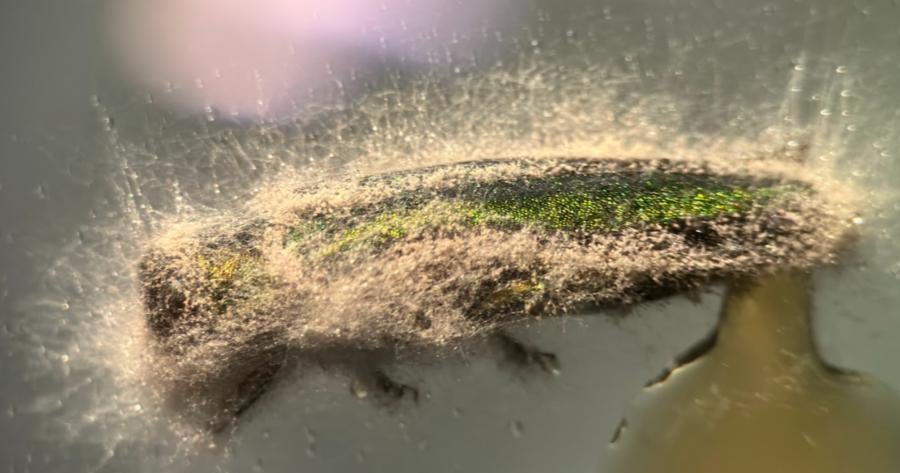
Invasive emerald ash borers, which have devastated ash tree populations since their 2009 arrival in Minnesota, may soon face a natural adversary. A recent study by the University of Minnesota has identified specific native fungi capable of effectively killing these destructive beetles. The research focused on fungi's ability to infect the pests and shorten their lifespans, offering a potential biological control method.

Scientists are exploring the use of autodissemination devices, a novel strategy where beetles are trapped and coated with fungus spores. These infected beetles then spread the spores through natural behaviors like mating, effectively acting as carriers to infect other beetles. This method is particularly promising for reaching pests in hard-to-access forested areas.

Field trials are currently underway across Minnesota's state parks and forests, with researchers testing the four most successful fungal strains. This collaborative effort with state and private land managers aims to determine the efficacy of this fungal-based pest control under real-world conditions, offering hope for the preservation of the state's ash trees.

Disclaimer: This story has been auto-aggregated and auto-summarised by a computer program. This story has not been edited or created by the Feedzop team.
The study found that certain native Minnesota fungi can infect and kill the invasive emerald ash borer beetle.
These devices trap beetles, coat them with fungus spores, and allow the beetles to spread the spores through mating.
Yes, researchers specifically tested fungi found within Minnesota to ensure they are native and can thrive locally.

Read more news on

Environmentside-arrowMinnesotaside-arrow

You may also like

Gophers Brave Arctic Blast for Axe

2 Dec • 7 reads

article image

Kid's "Schedule" Hilariously Declines Chores

1 Dec • 11 reads

article image

Insect Decline Alarms Scientists in Remote Colorado Meadow

2 Nov • 130 reads

article image

Melting Arctic Ice Transforms Shipping Lanes, Threatens Ecosystems

15 Oct • 127 reads

article image

Sturgeon Comeback: Ancient Fish Thrive in Minnesota-South Dakota Lake

12 Oct • 108 reads

article image