Home / Environment / Robin Hood's Oak Dies After 1200 Years
Robin Hood's Oak Dies After 1200 Years
18 Jun
Summary
- The legendary Major Oak, rooted in Sherwood Forest, has died after an estimated 1200 years.
- Conservation efforts and human activity contributed to the ancient tree's decline.
- Climate change effects, like heatwaves, compounded the oak's natural aging challenges.
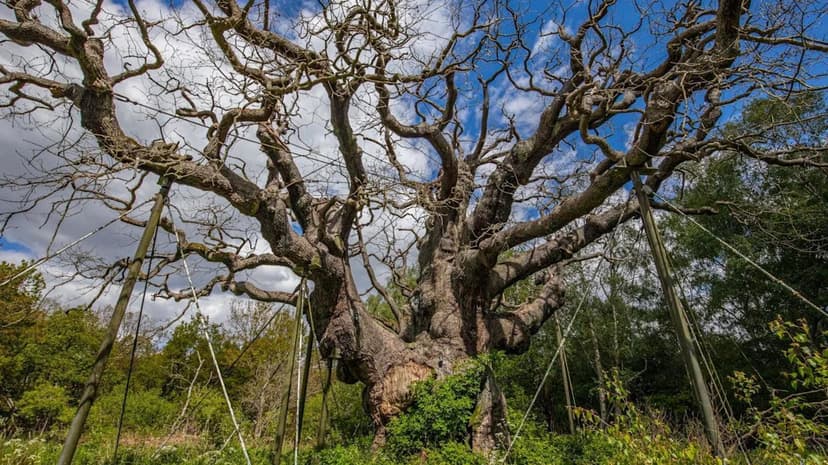
The Major Oak, an ancient oak tree estimated to be up to 1,200 years old and a legendary fixture in Sherwood Forest, Nottinghamshire, is believed to have died. Conservation charities, including the RSPB, managed the tree, which drew millions of visitors over its centuries-long existence.
Experts cite a complex combination of issues for the tree's decline. These include years of well-intentioned structural interventions and significant human activity, which compacted the soil around its roots. Recent effects of climate change, such as heatwaves and droughts, further exacerbated the challenges the tree faced due to its age.
Although the Major Oak has died, it will remain in Sherwood Forest as a habitat for wildlife and a natural monument. Saplings from the tree have been planted worldwide, and its hollow trunk is famously linked to the legend of Robin Hood's hideout.
Conservationists have learned valuable lessons from caring for the Major Oak, which they hope to apply to protecting other ancient trees across Britain. While the tree's decline was noted over the last few years, exacerbated by five hot and droughty summers, its demise was not immediately visible.


