feedzop-word-mark-logo
searchLogin
Feedzop
homeFor YouUnited StatesUnited States
You
bookmarksYour BookmarkshashtagYour Topics
Trending
Terms of UsePrivacy PolicyAboutJobsPartner With Us

© 2026 Advergame Technologies Pvt. Ltd. ("ATPL"). Gamezop ® & Quizzop ® are registered trademarks of ATPL.

Gamezop is a plug-and-play gaming platform that any app or website can integrate to bring casual gaming for its users. Gamezop also operates Quizzop, a quizzing platform, that digital products can add as a trivia section.

Over 5,000 products from more than 70 countries have integrated Gamezop and Quizzop. These include Amazon, Samsung Internet, Snap, Tata Play, AccuWeather, Paytm, Gulf News, and Branch.

Games and trivia increase user engagement significantly within all kinds of apps and websites, besides opening a new stream of advertising revenue. Gamezop and Quizzop take 30 minutes to integrate and can be used for free: both by the products integrating them and end users

Increase ad revenue and engagement on your app / website with games, quizzes, astrology, and cricket content. Visit: business.gamezop.com

Property Code: 5571

Home / Environment / Beetles Deployed to Battle Maine's Invasive Forest Pest

Beetles Deployed to Battle Maine's Invasive Forest Pest

22 Nov, 2025

•

Summary

  • Predatory beetles from Asia combat invasive hemlock woolly adelgid.
  • Maine's Midcoast is the current frontline in this ecological battle.
  • Warming winters due to climate change aid pest survival.
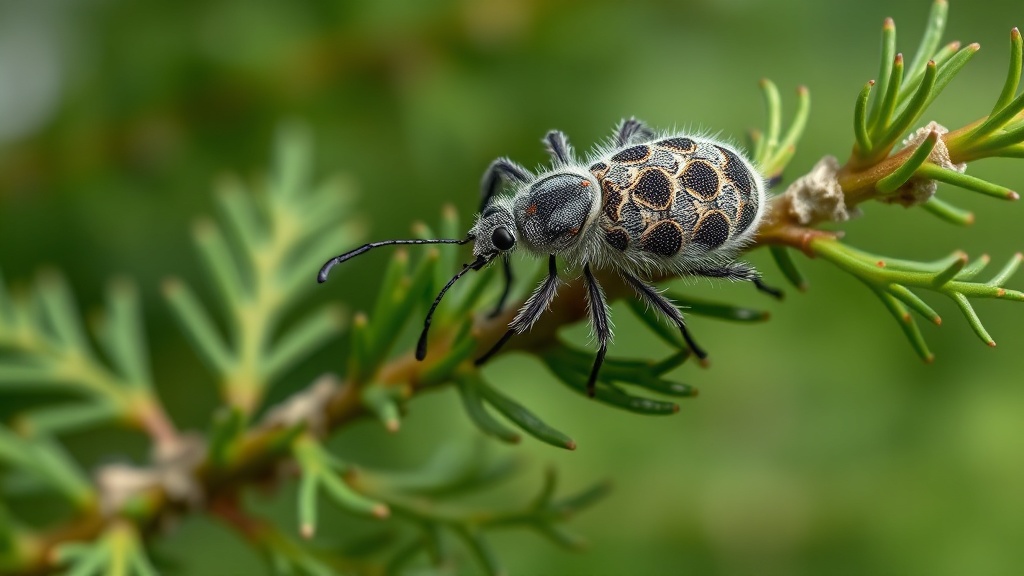
Beetles Deployed to Battle Maine's Invasive Forest Pest

Maine's battle against the invasive hemlock woolly adelgid has intensified, with the Midcoast region now serving as the primary front. This tiny, sap-siphoning insect, originating from East Asia, has spread significantly, bypassing quarantines and lacking natural predators in New England. Its presence leads to the death of eastern hemlock trees, with infestations creeping further inland towards the state's western hemlock belts.

In response, a coalition of land trusts, private landowners, and the Maine Forest Service is deploying a biological control: predatory beetles. Species like *Laricobius nigrinus* and *Laricobius osakensis*, which prey on the adelgid in their native lands, are being released. These beetles, carefully vetted for safety, are introduced to infested areas like Wiscasset's Sortwell Memorial Forest in hopes of reducing adelgid populations.

While the effectiveness of this beetle-led counteroffensive will take years to assess, forest managers remain optimistic. They aim to reduce adelgid numbers to protect hemlock stands, especially as climate change contributes to warmer winters that favor the pest's survival. This proactive approach seeks to preserve Maine's vital hemlock forests against ongoing threats.

Disclaimer: This story has been auto-aggregated and auto-summarised by a computer program. This story has not been edited or created by the Feedzop team.
The hemlock woolly adelgid is a non-native insect that damages and can kill eastern hemlock trees by feeding on their sap.
Scientists are releasing natural predators, specifically two species of beetles from Asia and the Pacific Northwest, to control adelgid populations.
The Midcoast is currently the main area of infestation, making it the frontline for controlling the adelgid's spread into more inland forests.

Read more news on

Environmentside-arrowMaineside-arrow
trending

Roblox CEO sells stock

trending

Tigers linked to Bassitt, Giolito

trending

Wawrinka gets Australian Open wildcard

trending

Ozark Trail stoves recalled

trending

Switzerland reaches United Cup final

trending

Hurkacz leads Poland to title

trending

Medvedev credits Aussie coach revival

trending

Adithya Ashok: New Zealand Squad

You may also like

Dino's Spiky Hand: The Ultimate Egg Thief?

17 hours ago • 5 reads

article image

Triceratops Once Roamed Europe, Fossils Reveal

1 day ago • 9 reads

article image

Extinct Fish Species Found Alive in Bolivia!

24 Dec, 2025 • 76 reads

article image

Lion and Bear Rescued from Albanian Estate

18 Dec, 2025 • 105 reads

article image

Arctic Thaw: Hunter's Fear for Culture

13 Dec, 2025 • 177 reads

article image