Home / Environment / Invasive Nutria Devour Louisiana Coastline
Invasive Nutria Devour Louisiana Coastline
29 Jul
Summary
- Nutria, introduced in the 1930s for fur, now destroy thousands of acres.
- Unlike native muskrats, nutria eat roots, leading to severe wetland erosion.
- A control program paying bounties has reduced damage by over 90%.
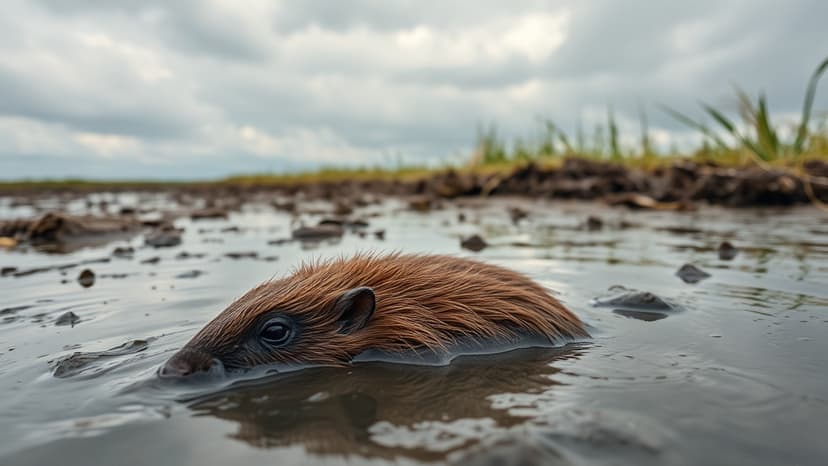
Originally brought to Louisiana in the 1930s for a nascent fur industry, South American nutria have become a major ecological threat. These large, semi-aquatic rodents, native to South America, were introduced to the state for their valuable pelts. Decades later, their feeding habits have led to the destruction of thousands of acres of vital coastal wetlands annually.
Nutria's destructive impact stems from their practice of consuming plant roots, unlike native species like muskrats that primarily eat leaves. This root consumption makes it difficult for vegetation to recover, exposing marsh soil to erosion. Over time, this can lead to the permanent conversion of marshland into open water.
The scale of nutria-related wetland damage was significant, with estimates reaching over 102,585 acres in the past, though a 2018 figure stood at approximately 16,424 acres. Damage levels surged when the fur market collapsed in the 1980s, causing nutria populations to rebound.
To combat this crisis, Louisiana established the Coastwide Nutria Control Program in 2002. This initiative pays hunters and trappers for each nutria tail collected, aiming to remove up to 400,000 rodents each season. Since the program's start, wetland damage has reportedly decreased by over 90 percent compared to pre-program levels.


