
Home / Environment / Lohit: India's Mystical River of Blood
Lohit: India's Mystical River of Blood
14 May
Summary
- The Lohit River flows from Tibet through Arunachal Pradesh to Assam.
- Its red color stems from iron-rich soil and the Parashuram Kund legend.
- The valley boasts rich biodiversity and a mix of cultures.
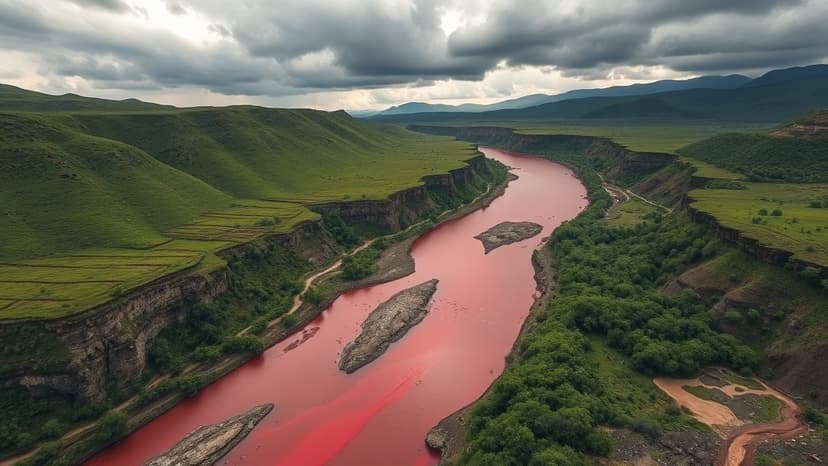
The Lohit River, originating in Tibet, flows 200 kilometers through Arunachal Pradesh before reaching Assam's plains. This 'River of Blood' earns its name from both geological and mythological sources. Its reddish color is attributed to iron-rich laterite soil, particularly noticeable during high flow after rainfall.
Mythologically, the river is linked to the legend of Parashuram Kund, where the warrior-sage is said to have bathed to cleanse his sin, turning the waters red. The Lohit valley itself is a region of immense biodiversity, transitioning from alpine to tropical forests and supporting a rich array of flora and fauna.
Culturally, the valley is home to the Mishmi, Khampti, and Singpho communities, showcasing a unique fusion of animist beliefs, Theravada Buddhism, and Hinduism. Parashuram Kund is a significant pilgrimage site, drawing thousands for a holy dip during Makar Sankranti.
Travelers can experience the dramatic landscapes by driving to Walong, India's easternmost frontier. Essential travel preparations include obtaining an Inner Line Permit and Protected Area Permit. The best time to visit is between October and April, avoiding the monsoon season due to difficult road conditions.
