Home / Environment / Thousands of Red List Lapwings Flock to UK Coast
Thousands of Red List Lapwings Flock to UK Coast
21 Feb
Summary
- Thousands of lapwings are congregating along the Humber estuary.
- Lapwings are a UK Red List species facing severe population decline.
- The Humber has attracted birds from the continent and across the UK.
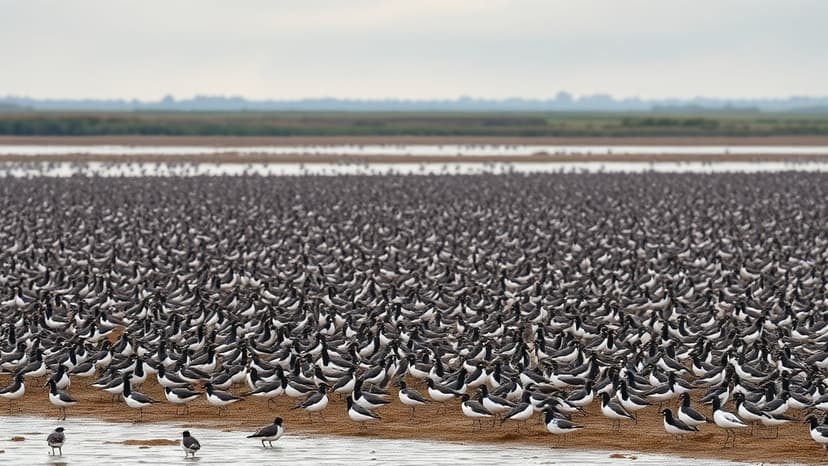
The Humber estuary has become a significant gathering point for lapwings, with "crazy numbers" reported by the RSPB. This influx is particularly noteworthy as the lapwing is currently on the UK Red List, designated as a species of the highest conservation priority due to severe population declines nationally, which have fallen by 55% since the 1960s.
An estimated 15,000 to 20,000 lapwings have been counted along the stretch from Blacktoft Sands near Goole to Tetney Marshes south of Grimsby. At the RSPB's Blacktoft Sands nature reserve alone, over 2,800 of these wading birds have been observed roosting. Site manager Pete Short described the situation as "really fantastic," especially given the national decline in breeding lapwing populations.
These birds, also known as peewits for their distinctive call, are journeying to the Humber and its adjacent arable land from continental Europe and other regions within the UK for feeding. Their presence is also noted at other RSPB sites like Reeds Island and Tetney, contributing to the high numbers observed along the wider estuary. The RSPB is involved in the East Coast Wetlands Project, an initiative focused on preserving vital habitats for approximately one million migrant waders and wildfowl that transit through this area of the UK each year.