feedzop-word-mark-logo
searchLogin
Feedzop
homeFor YouUnited StatesUnited States
You
bookmarksYour BookmarkshashtagYour Topics
Trending
Terms of UsePrivacy PolicyAboutJobsPartner With Us

© 2026 Advergame Technologies Pvt. Ltd. ("ATPL"). Gamezop ® & Quizzop ® are registered trademarks of ATPL.

Gamezop is a plug-and-play gaming platform that any app or website can integrate to bring casual gaming for its users. Gamezop also operates Quizzop, a quizzing platform, that digital products can add as a trivia section.

Over 5,000 products from more than 70 countries have integrated Gamezop and Quizzop. These include Amazon, Samsung Internet, Snap, Tata Play, AccuWeather, Paytm, Gulf News, and Branch.

Games and trivia increase user engagement significantly within all kinds of apps and websites, besides opening a new stream of advertising revenue. Gamezop and Quizzop take 30 minutes to integrate and can be used for free: both by the products integrating them and end users

Increase ad revenue and engagement on your app / website with games, quizzes, astrology, and cricket content. Visit: business.gamezop.com

Property Code: 5571

Home / Environment / Land Sinking Faster Than Seas Rise: New Flood Threat

Land Sinking Faster Than Seas Rise: New Flood Threat

28 Jan

•

Summary

  • Human-driven land subsidence is now the main flood risk for millions.
  • Land is sinking faster than sea levels are rising in many deltas.
  • Groundwater extraction is a primary driver of accelerated land sinking.
Land Sinking Faster Than Seas Rise: New Flood Threat

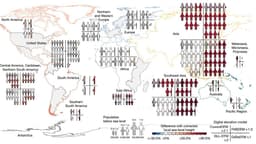
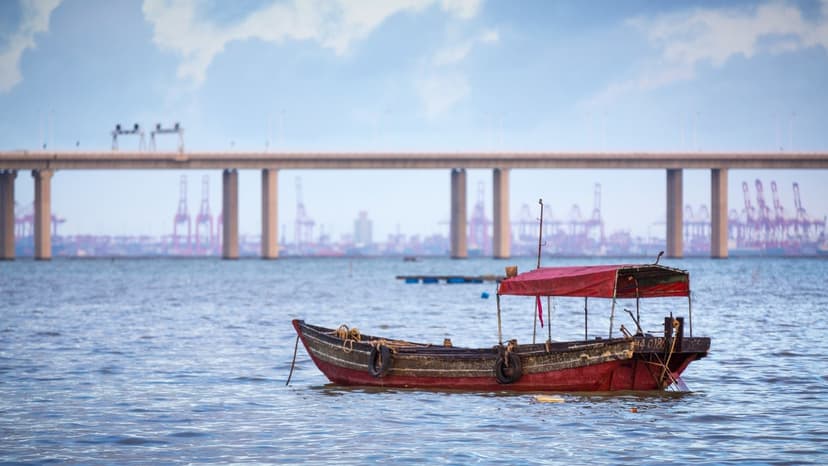
A global study encompassing 40 major river deltas has identified human-driven land subsidence as the primary threat for millions facing coastal flooding. This sinking land is now a more significant risk than the sea-level rise long associated with climate change.

The research, published in Nature, utilized satellite data from 2014 to 2023. It found that every delta studied is experiencing subsidence, with over half sinking at an average rate exceeding 3 mm annually. In 13 deltas, including the Nile and Mekong, land is sinking faster than global sea levels are currently rising.

Human activities, particularly extensive groundwater extraction for urban and agricultural use, are accelerating this sinking process. Reduced sediment flow from dams and urban growth also contribute significantly. In many deltas, subsidence now contributes more to relative sea-level rise than ocean warming.

Millions living in low-lying delta regions, especially in South and Southeast Asia, are disproportionately affected. While subsidence is a local issue and potentially preventable through measures like groundwater regulation and sediment flow restoration, many of the most vulnerable deltas are in low-income countries with limited resources.

Scientists emphasize that mitigating subsidence is crucial alongside climate change efforts to safeguard coastal cities from displacement, food insecurity, and economic disruption.


Disclaimer: This story has been auto-aggregated and auto-summarised by a computer program. This story has not been edited or created by the Feedzop team.
The main flood risk for millions in river deltas is now human-driven land subsidence, which is a greater threat than sea-level rise.
Land is sinking faster than sea levels are rising primarily due to human activities like extensive groundwater extraction, reduced sediment flow from dams, and urban growth.
Yes, land subsidence is a local process that can potentially be slowed or halted through measures such as regulating groundwater extraction, restoring sediment flows, and improved urban planning.

Read more news on

Environmentside-arrowSoutheast Asiaside-arrow
trending

Ohio snow emergency declared

trending

TikTok down in United States

trending

Andreeva matches Venus Williams' feat

trending

Warrington Hospital baby death

trending

Alexander Zverev advances in Australia

trending

Oilers host Capitals

trending

London celebrates Chinese New Year

trending

Liza Minnelli defends AI use

You may also like

Space Sensors Fight Growing Drought Threat

19 Jan • 47 reads

article image

Human Intervention Stabilizes Eroding Beaches

18 Jan • 63 reads

article image

Global Oceans Hit Record Heat, Driving Extreme Weather

17 Jan • 71 reads

article image

2026: The Year Coral Reefs Could Vanish?

6 Jan • 184 reads

article image

Desert Green: Groundwater Key to Fighting Desertification

5 Jan • 109 reads

article image