Home / Environment / Lake Powell Sinks to Record Lows
Lake Powell Sinks to Record Lows
13 May
Summary
- Lake Powell faces historically low inflows this year.
- Drought grips the Colorado River system impacting water supply.
- Water releases are being managed to prevent critical thresholds.
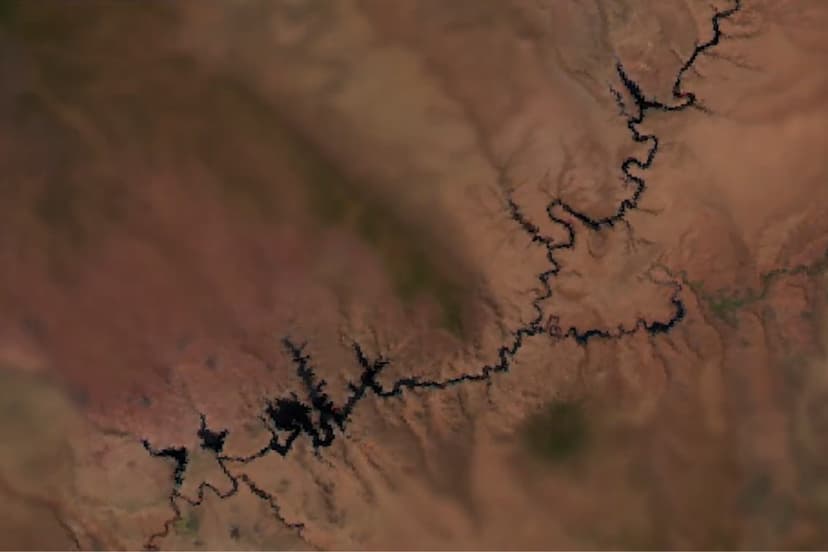
Federal forecasts indicate Lake Powell is projected to receive only 13 percent of its typical April-to-July runoff, marking the lowest inflow since its creation in 1963. A recently released time-lapse visualizes over a decade of declining water levels, captured by NOAA's JPSS satellites between 2012 and 2026. This situation exacerbates the long-term drought gripping the Colorado River, a vital resource supplying water to 40 million people and irrigating over 5 million acres of farmland across seven U.S. states and Mexico.
Water managers have implemented measures to bolster Lake Powell's levels. These include releasing water from the upstream Flaming Gorge Reservoir and reducing downstream releases to Lake Mead. This strategy aims to prevent the reservoir from reaching critical thresholds, though concerns remain about potential impacts on hydropower production at Glen Canyon Dam, local economies, and recreational activities. These actions follow a period of record-low snowpack and unusually warm March temperatures, which intensified drought conditions across the basin.
Negotiations are ongoing among the seven Colorado River basin states and Mexico to establish new water-sharing agreements as existing ones near expiration. Lower Basin states, Arizona, California, and Nevada, recently proposed a conservation plan to cut their water use by up to 1 million acre-feet annually through 2028. This proposal supplements previously agreed-upon reductions and includes voluntary cuts supported by federal drought funding.


