Home / Environment / Ladakh: The Desert That Freezes
Ladakh: The Desert That Freezes
19 Dec, 2025
Summary
- Ladakh is a cold desert receiving under 100 mm annual rainfall.
- High altitudes create rain shadows, leading to dry conditions.
- Life adapts to short summers and extreme sub-zero winters.

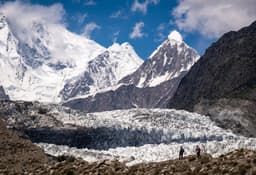
Ladakh, situated in northern India, is officially classified as a cold desert, a region characterized by minimal rainfall and extreme cold rather than heat. Annual precipitation in Ladakh rarely exceeds 100 mm, with the surrounding Himalayan ranges forming a natural barrier that blocks monsoon clouds, creating a significant rain shadow effect and contributing to the dry environment.
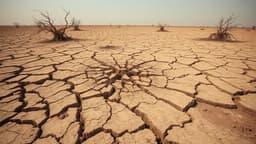
Unlike warmer desert counterparts such as the Thar Desert, Ladakh's climate is defined by freezing winters where temperatures can plummet below minus 20 degrees Celsius, and rapid moisture loss due to high altitudes. Despite winter snowfall, the ground remains arid, limiting vegetation and agricultural possibilities. Traditional life in Ladakh necessitates careful planning, with communities relying on preserved crops and efficient heating methods, often incorporating solar energy, to endure the harsh conditions.
The unique geography of Ladakh, featuring rocky, mountainous terrain and vast valleys carved by rivers like the Indus, shapes its culture and connectivity. During winter months, severe snowfall often leads to road closures, transforming Ladakh into one of India's most isolated inhabited regions. Travelers often experience immediate physical adjustments to the thin, cold air and high altitude, underscoring the profound impact of the landscape on human experience.