Home / Environment / 'The State Sold Itself': Decades of Toxic Waste Haunt Italy's South
'The State Sold Itself': Decades of Toxic Waste Haunt Italy's South
29 Jan
Summary
- Europe condemned Italy for failing to protect citizens in the 'Land of Fires'.
- Decades of illegal toxic waste dumping have poisoned vast areas of southern Italy.
- Residents face severe health consequences, including high cancer rates and birth defects.

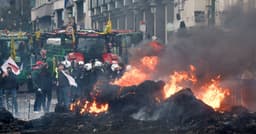
One year ago, the European Court of Human Rights condemned Italy for failing to protect citizens in Campania's 'Land of Fires'. This region has been devastated by decades of illegal toxic waste dumping and burning, orchestrated by the Camorra criminal network and complicit companies. Residents, like Angelo Venturato, tragically lost loved ones to cancer, a grim reality in an area with exceptionally high rates of the disease.
Investigative journalist Marilena Natale highlights how the state's complicity enabled this environmental crisis, earning her police protection. For over 40 years, toxic and radioactive waste seeped into the soil and groundwater, leading to widespread health issues, including unprecedented rates of cancer, Alzheimer's, and Parkinson's. The Italian state officially acknowledged this health impact only in 2021, a recognition too late for many families.
The European Court of Human Rights ruled in January 2025 that Italy violated the right to life by failing to address the situation diligently. The court ordered a comprehensive remediation strategy and public information platform within two years. Italy responded with new decrees to combat eco-crimes, appointing a special commissioner for cleanup efforts estimated to cost €2 billion over 10 years.
However, skepticism remains high as toxic waste continues to be dumped illegally. Activist groups, like 'Le Mamme di Miriam,' document ongoing pollution, criticizing the insufficient cleanup measures and lengthy timelines. Lawyers argue that repression alone is not enough, emphasizing the need for shared responsibility across production chains and a European law on waste traceability to prevent future 'Lands of Fires' globally.