Home / Environment / Irish Place Names Reveal Lost Wildlife
Irish Place Names Reveal Lost Wildlife
11 Sep
Summary
- Irish place names hold ecological clues about past wildlife and habitats.
- Names like 'Mount Eagle' and 'wolf's grave' recall extinct species.
- These names guide future rewilding and climate adaptation efforts.
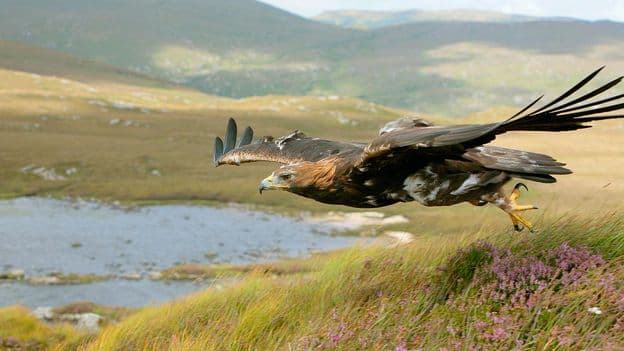
Irish place names are emerging as a powerful tool for understanding the island's ecological past and planning its future. Many names, rich with descriptive language, directly reference animals, plants, and landforms that have since disappeared or changed. For instance, 'Sliabh an Iolair' (Mount Eagle) recalls a time when eagles inhabited Ireland, a stark contrast to their extinction during Peig Sayers' lifetime.
Folklorist Mairéad Nic Craith highlights that these names function as traditional ecological knowledge, capturing centuries of human interaction with the environment. While colonisation often obscured these meanings with English versions, some names like 'Tuaim na Mac Tíre' (grave of the wolf) still hint at historical wildlife presence. Similarly, names containing 'doire' (wood) or specific tree names like 'dair' (oak) and 'fuinse' (ash) paint a picture of Ireland's extensive deforestation.
Beyond recalling lost species, these place names are inspiring contemporary conservation efforts. Researchers are investigating them for clues to potential rewilding sites and climate adaptation strategies. For example, a location historically known as 'Loch Gabhar' (lake of horses) is being considered for rewetting to manage floodwater, a direct application of place-name-informed adaptation. This approach is also being adopted in Scotland and Britain for tree-planting and flood resilience planning.
Though not literal instructions, these names offer valuable starting points, showing what landscapes were once capable of. The reintroduction of white-tailed eagles to County Kerry in 2007, with some now returning to the vicinity of Sliabh an Iolair, exemplifies this cyclical connection. The ancient names, once echoes of the past, are becoming beacons for a future where nature is restored and ecological memory is rekindled.


