
Home / Environment / Iraq's Desert Blooms: Marshes Revive After Drought
Iraq's Desert Blooms: Marshes Revive After Drought
7 May
Summary
- Rising water levels draw buffalo herders back to historic, drought-stricken marshes.
- Heavy winter rainfall boosted reservoir levels, enabling water release into marshes.
- Submerged marshland increased to 32-36% from under 8% previously.
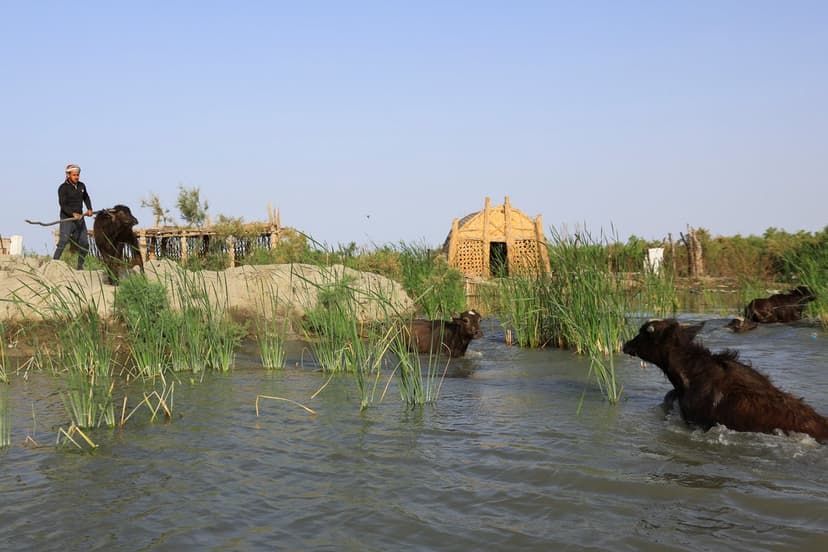
Iraq's ancient marshes, once devastated by drought, are now witnessing a significant revival. Rising water levels have permitted buffalo herders and fishermen to return to areas previously left dry and abandoned. This resurgence is attributed to heavy winter rainfall that replenished reservoir levels, enabling the water resources ministry to release greater volumes into the Chibayish and other southern marshes.
Expert Jassim al-Assadi confirmed that areas like Ishan Hallab, a UNESCO World Heritage site, which had completely dried up between 2021 and 2025, are now showing signs of recovery. The proportion of submerged marshland has dramatically increased to between 32% and 36%, a stark contrast to the less than 8% seen over the past five years. This recovery is also fostering a gradual return of biodiversity, including fish stocks and the reeds essential for traditional homes.
The restoration efforts are supported by larger water inflows, improved management, and increased flows in the Tigris and Euphrates rivers. Iraq's strategic water reserves have grown by approximately 6 billion cubic meters this year, providing greater flexibility. These marshes, historically home to the Marsh Arabs for millennia and heavily drained in the 1990s, are gradually reflooding, allowing for the return of communities displaced by past environmental degradation and conflict.
