Home / Environment / Mysterious Crocus Field: Britain's Largest Display Blooms
Mysterious Crocus Field: Britain's Largest Display Blooms
4 Mar
Summary
- Inkpen boasts Britain's largest wild spring crocus display.
- The origin of the 400,000 crocuses remains a historical mystery.
- The site is a 1912 nature reserve rich in diverse local flora.
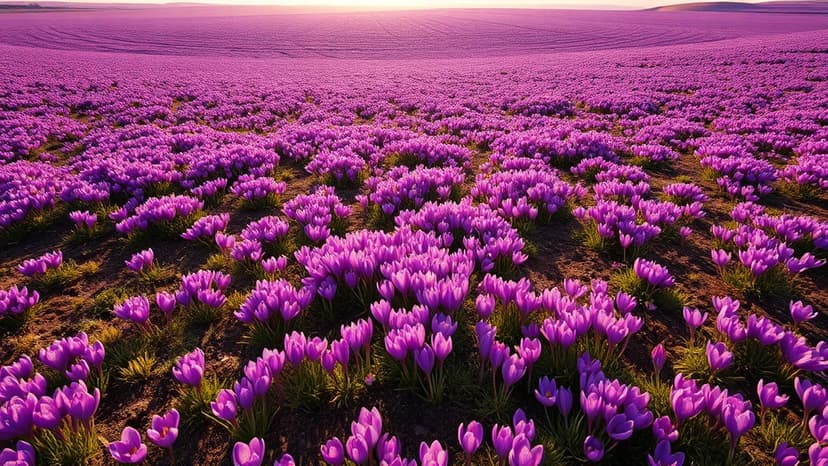
In Inkpen, West Berkshire, a boggy valley of old pasture thrives as a nature reserve, renowned for Britain's largest display of wild spring crocuses. Approximately 400,000 crocuses emerge each spring, painting the landscape with their purple and yellow hues. This unique site, established as a reserve in 1912, is a rare example of unimproved meadow, supporting a rich variety of wildflowers like heath spotted-orchid and betony.
The precise origin of these abundant crocuses is a subject of historical intrigue. One prevalent theory links them to the Knights Templar, who settled in the area during the 12th century. It is speculated that they may have brought the flowers back from the Crusades, perhaps as a mistaken or inexpensive form of saffron. However, the crocuses are identified as Crocus vernus, distinct from the saffron-producing Crocus sativus, leaving room for other explanations.
Regardless of their history, the crocus field endures as a vital habitat. It supports wildlife such as barn owls hunting voles and various insects, including brimstone butterflies. This unusual spectacle, a blend of cultivated appearance and wild setting, makes Inkpen's crocus field an extraordinary and defiant natural reserve, standing out in time and place.