
Home / Environment / Vulture Numbers Plummet Amidst Indore's Scorching Heat
Vulture Numbers Plummet Amidst Indore's Scorching Heat
24 May
Summary
- Vulture census in Indore shows a stark decline in sightings.
- Egyptian vultures are the only species recorded during the census.
- Habitat loss and reduced food sources threaten vulture populations.
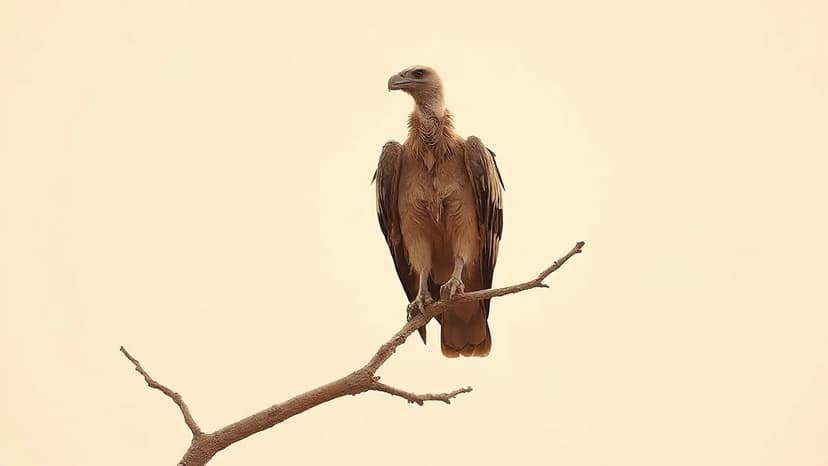
Concerns are rising over the safety of Madhya Pradesh's wildlife as a current vulture census in Indore's Forest Division indicates a steep decline in scavenger bird sightings. Data collected by Saturday, May 23, 2026, revealed a complete absence of vultures in the Mhow and Ralamandal sectors. Forest officials are pointing to the severe summer heat, drying water sources, and shrinking habitats as primary causes for this trend.
The census, covering 33 locations across four forest ranges, identified only Egyptian vultures. A comparison with the winter census in February 2026 shows a significant decrease in numbers. Divisional Forest Officer Lal Sudhakar Singh explained that localized migration occurs as natural water bodies dry up, forcing birds to seek distant perennial sources. Furthermore, modern sanitation practices limit the availability of livestock carcasses, the vultures' main food supply. This is particularly evident in Indore's Devguradia area, once a popular nesting site, where only one vulture was spotted.
Long-term challenges, including urbanization and infrastructure development like roads and railways, have reduced dense forest canopies and nesting sites. Experts note the loss of tall trees and high rocky cliffs essential for breeding. The synchronized census, concluding on Sunday, May 24, 2026, will finalize the statewide population assessment.
