Home / Environment / Rural India's Climate Fight: Local Plans Key to Resilience
Rural India's Climate Fight: Local Plans Key to Resilience
6 Jul
Summary
- Climate crisis is a current reality for rural Indian villages.
- Gram panchayats can integrate climate resilience into local planning.
- Shifting GPDPs from schemes to landscape convergence is crucial.
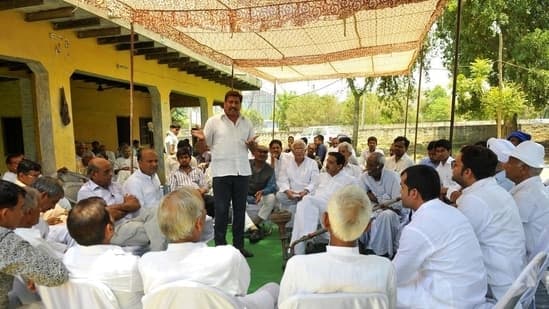
Across rural India, the climate crisis is a present reality, manifesting in falling groundwater, erratic rainfall, and declining soil fertility. These interconnected challenges strain livelihoods, yet village planning frequently remains departmental and fragmented.
The gram panchayat, through its annual development plan (GPDP), offers an existing framework for local planning. However, climate risks are rarely integrated into decisions about water, livelihoods, or agriculture.
A climate-responsive GPDP moves beyond scheme convergence toward landscape convergence. This means prioritizing what a landscape needs for long-term resilience rather than solely focusing on funding government schemes.
Tools like the Landscape Character Assessment Tool (LCAT) help communities understand their environment holistically. Demonstrations, such as Chhattisgarh's 'Mor Gaon Mor Pani' initiative, showcase practical water security measures led by local institutions.
Villages like Barchegondi exemplify this approach. Despite facing groundwater decline and soil degradation, their existing strengths—active women's groups, youth collectives, and traditional knowledge—are leveraged for climate adaptation.
This integrated planning recognizes that solutions like reintroducing millets, strengthening livestock-agriculture links, and community-led waste management simultaneously address nutrition, soil health, and emissions.
Climate resilience requires a transition pathway, not isolated interventions. A climate-integrated GPDP helps panchayats see how water, forests, agriculture, and livelihoods interact as one system.
This approach transforms development metrics from assets created to healthier soils, secure water systems, thriving biodiversity, and adaptable communities. It represents a shift from implementing schemes to managing transitions.
India's climate response must be built village by village, leveraging the institutional framework of GPDP and active community groups. A new planning lens focused on climate-integrated GPDP empowers local governments as landscape stewards.
Ultimately, when GPDP planning starts with the landscape, climate action becomes local development, fostering resilience across ecosystems, livelihoods, and institutions.


