

Home / Environment / India's Tigers: A Balancing Act
India's Tigers: A Balancing Act
22 Apr
Summary
- Tadoba reserve saw 10 tigers on a recent two-day visit.
- Local communities face human-tiger conflict with 10 deaths yearly.
- Tiger reserve revenue is redistributed to reduce conflict.
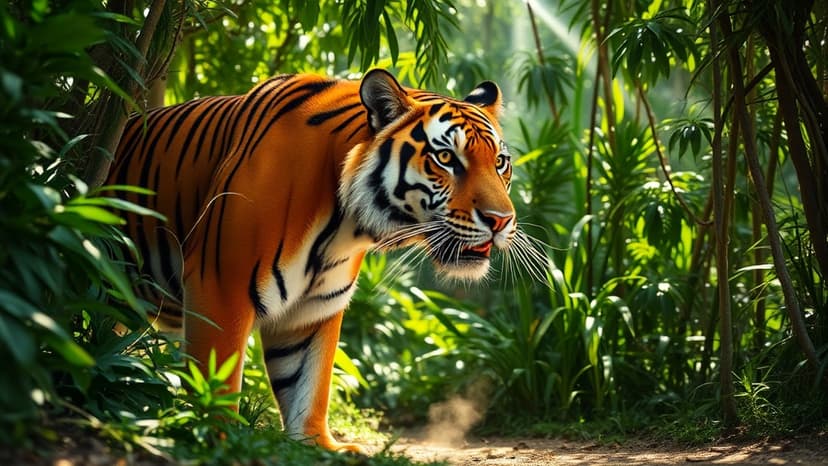
India's Tadoba-Andhari Tiger Reserve (TATR) exemplifies a model for coexisting with tigers, balancing conservation success with the challenges of human-wildlife conflict. Recent visits revealed thriving tiger populations, with sightings of up to 10 individuals, including a mother with four cubs. However, the region grapples with an average of 10 human deaths annually due to tiger-related conflict in TATR alone, alongside significant cattle losses.
The reserve, home to approximately 100 tigers, successfully manages tourism, with 117,000 visitors in its core zone last year. While tiger numbers grow, prompting dispersal beyond the buffer zone, conservation efforts are enhanced by financial decentralization and local community involvement. Significant portions of the Rs 40 crore annual ticket revenue are reinvested locally to reduce conflict, improve livelihoods, and raise awareness, making poaching a negligible issue.
TATR is also expanding its tourism focus beyond tigers, exploring agrotourism, stargazing, and developing facilities like a water bottling plant to reduce single-use plastics. While most locals accept the trade-offs for stable income and improved infrastructure, challenges remain, such as the impact of artificial waterholes on prey and predator populations. The reserve highlights a path toward regenerating natural capital while minimizing loss of life, ensuring the coexistence of humans and wildlife.
