

Home / Environment / India's Air Quality Improves Marginally, Still Dangerously High
India's Air Quality Improves Marginally, Still Dangerously High
8 Apr
Summary
- India's PM2.5 levels are nearly ten times higher than WHO guidelines.
- The nation ranks sixth globally for air pollution in 2025.
- Loni in Uttar Pradesh was India's most polluted city in 2025.
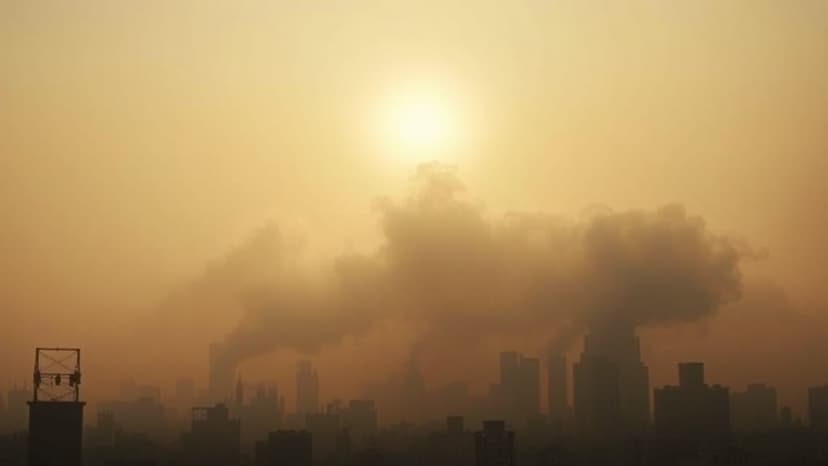
India recorded a marginal 3% improvement in its annual average PM2.5 concentration in 2025, reaching 48.9 µg/m³. However, this level remains nearly ten times the World Health Organization's recommended guideline. Consequently, India is now positioned as the sixth most polluted country worldwide, highlighting persistent challenges despite incremental gains.
The latest World Air Quality Report, compiled from ground-level measurements, reveals that 17 of the world's 20 most polluted cities are in Central and South Asia. India is home to several of the most severely affected urban areas, with Loni in Uttar Pradesh identified as the most polluted city. Loni registered an annual average of 112.5 µg/m³, a significant increase from the previous year.
While cities like Mumbai are not among the absolute worst, they still contend with pollution spikes from sources such as road dust, construction, and vehicle emissions, particularly during winter. Environmentalists warn that without more targeted interventions, especially on industrial emissions and biomass burning, these cities risk worsening pollution levels.
The report also points out policy gaps, noting that while road dust control receives significant funding under the National Clean Air Programme, other major contributors like industrial emissions and biomass burning receive less attention. The health implications are stark, with a noted rise in respiratory and cardiac issues during periods of extreme pollution.
