Home / Environment / IEA Report: COP28 Renewables Goal Off Track
IEA Report: COP28 Renewables Goal Off Track
10 Nov
Summary
- Emerging economies rapidly install wind and solar amid Middle East crisis.
- China's solar growth slowed significantly in the first nine months of 2026.
- Global goal to triple renewable energy capacity by 2030 is currently behind schedule.
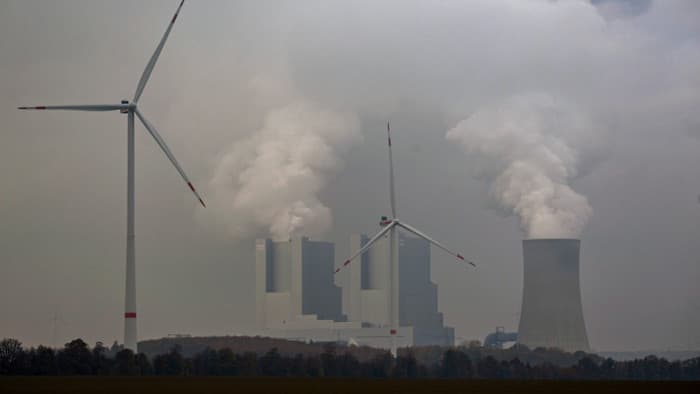
Emerging and developing economies are increasingly turning to renewable energy sources like wind and solar, driven in part by the Middle East crisis and soaring fossil fuel prices. India and other South-East Asian nations, along with parts of sub-Saharan Africa, the Middle East, and Latin America, are accelerating installations. This surge is partially counteracted by a significant slowdown in China's renewable growth during the first nine months of 2026, following changes in its electricity market. Consequently, global renewable deployment is projected to decrease by 11% in 2026, marking the first slowdown in over two decades, though it remains the second-highest year on record.
The COP28 pledge to triple global renewable energy capacity by 2030 appears to be off track, with current projections falling short of the target. The International Energy Agency estimates that reaching this goal would require significantly more investment in grid and storage infrastructure, alongside shorter permitting times. In other developments, biofuels are seeing a noticeable boost, with demand expected to grow by 30% by 2031, particularly in Latin America and South-East Asia, though concerns remain about land and water resource impacts. Solar power continues to dominate renewable capacity growth, with off-grid solar installations rising in popularity across Asia.
Challenges persist in integrating renewable energy into existing power systems. Grid and storage capacity are lagging behind new wind and solar farms, leading to increased instances of 'curtailed' electricity – power that cannot be used when output overwhelms the system. This issue is particularly pronounced in Europe, where negative electricity prices are becoming more common, and grid connection queues are lengthening, with approximately 4,400GW of projects waiting for grid access globally. Despite these hurdles, the economics of batteries and storage are improving rapidly, enabling regions like Australia and China to provide stable clean power more affordably by combining renewables with battery storage.


