
Home / Environment / Pollution Crisis: All Hyderabad Lakes Fail Water Standards
Pollution Crisis: All Hyderabad Lakes Fail Water Standards
3 Jan
Summary
- None of Hyderabad's 185 designated lakes meet water quality standards.
- Dissolved oxygen levels are critically low, with some near 0.3 mg/l.
- High BOD levels and toxic heavy metals contaminate the water bodies.
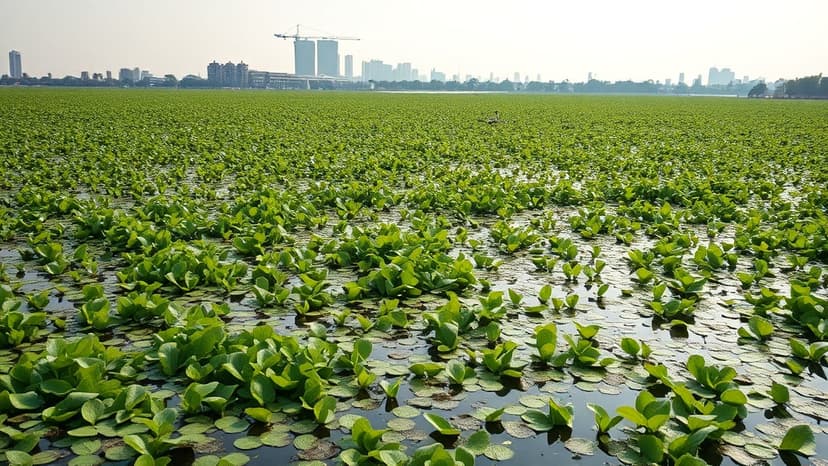
Recent data from the Telangana Pollution Control Board (TGPCB) indicates a severe ecological crisis, as none of Hyderabad's 185 designated lakes meet essential water quality standards. Critically low dissolved oxygen levels, some as low as 0.3 mg/l, render these water bodies incapable of supporting aquatic life. This alarming situation highlights a significant degradation of the city's urban waterways, demanding immediate attention.
Further compounding the issue are excessively high biochemical oxygen demand (BOD) levels, far exceeding the permissible limit of 3 mg/l, primarily due to untreated sewage and waste discharge. The presence of multiple toxic heavy metals, including cadmium, mercury, and lead, poses long-term risks to public health and groundwater quality. At least 23 lakes have completely dried up, exacerbating the environmental challenges.
Environmentalists attribute this persistent deterioration to rampant encroachment, unchecked sewage, and industrial effluent discharge, alongside poor solid waste management. A disproportionate focus on beautification over ecological restoration is cited as a key failure, with fragmented responsibilities among various government departments hindering effective action. The situation remains ongoing as of January 3, 2026.