Home / Environment / Hyderabad's Silent Smog: Traffic Chokes City Air
Hyderabad's Silent Smog: Traffic Chokes City Air
26 Feb
Summary
- Vehicular pollution is the main cause of Hyderabad's worsening air quality.
- PM2.5 levels are up to 35 times higher than WHO guidelines.
- Air pollution caused an estimated 5,552 annual deaths in Hyderabad (2008-2020).
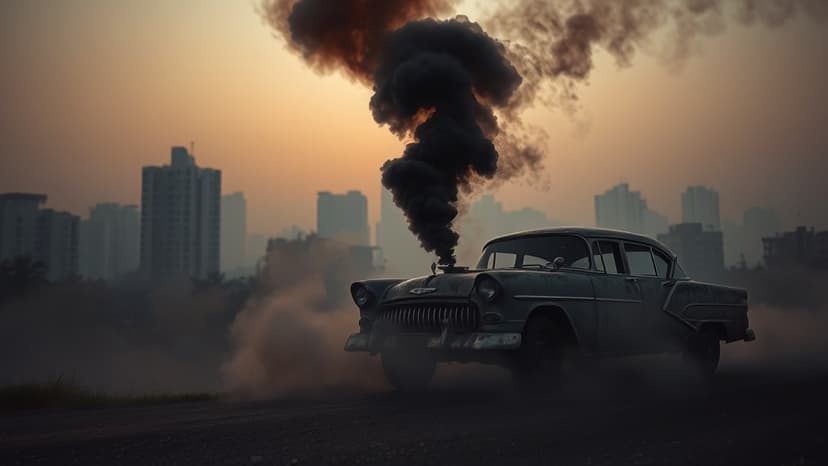
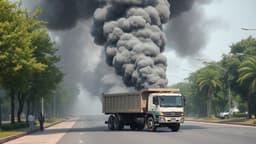
Hyderabad is grappling with a worsening air quality situation, predominantly fueled by vehicular pollution. While the city's Air Quality Index (AQI) may appear moderate, particulate matter levels such as PM2.5 are alarmingly high, up to 35 times above World Health Organization (WHO) guidelines. This persistent issue stems from the city's rapidly increasing vehicle population and ongoing traffic congestion.
Recent studies reveal a concerning trend, with PM2.5 concentrations rising significantly between 2011 and 2022, and further accelerating in recent winters. Beyond particulate matter, vehicular emissions are a major source of nitrogen dioxide (NO₂), with Hyderabad experiencing high levels on many days in 2023. Ozone pollution has also spread into residential areas, exceeding safe limits.
The impact on public health is substantial, with air pollution estimated to cause thousands of deaths annually in Hyderabad. Doctors report an increase in respiratory illnesses linked to long-term exposure to poor air quality. Despite its classification as a non-attainment city, Hyderabad has underspent its allocation for air quality improvement programs, highlighting implementation gaps.
Efforts are underway to address the crisis, including identifying pollution corridors and proposing measures like electric buses and stricter emission controls. However, experts emphasize the urgent need for improved public transport, promotion of non-motorized mobility, and stringent enforcement of vehicle and fuel standards to effectively combat vehicular emissions.