Home / Environment / Can a Virus Save Oahu's Palms?
Can a Virus Save Oahu's Palms?
12 Jan
Summary
- A novel virus shows promise in controlling invasive beetles.
- Researchers face challenges obtaining permits for virus testing.
- Native insects' safety is a key concern for virus deployment.
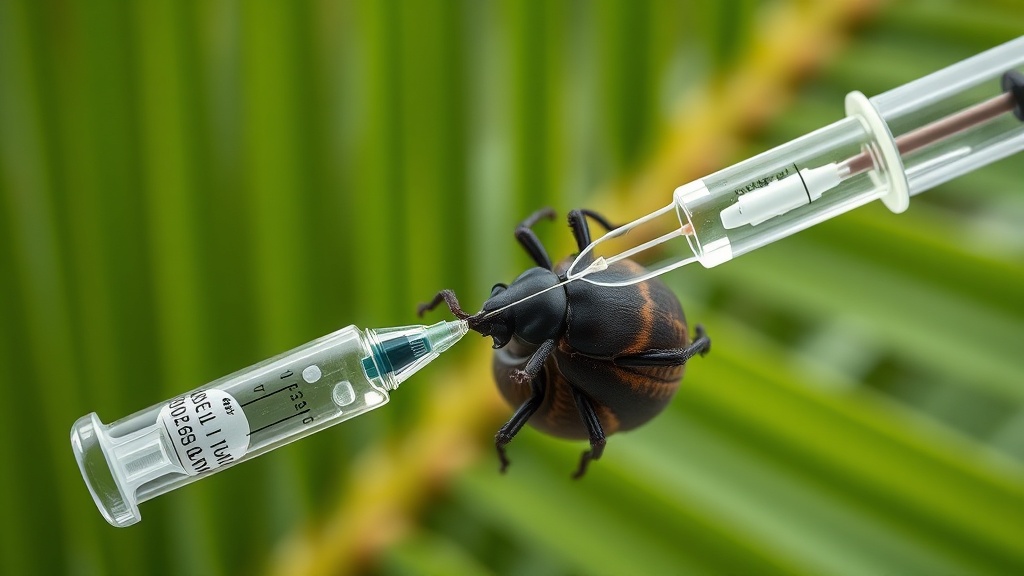
A specialized virus, a variant of the oryctes rhinoceros nudivirus (OrNV), is being investigated as a biological control for the destructive coconut rhinoceros beetle (CRB) on Oahu. Researchers are cautiously optimistic, with early laboratory tests showing the virus effectively kills beetle larvae. This approach is being explored as CRB has caused widespread infestation, leading to thousands of dead trees.
Despite the virus's success in other Pacific regions for decades, its introduction to Hawaii has been delayed. The state only recently obtained a permit to test the virus in April of this year due to a lack of secure containment facilities. A primary concern is the potential impact on native Hawaiian insects, necessitating extensive host-specific testing before any potential release into the wild.
While some experts estimate the virus could be released within two years, others believe it may already be too late for certain areas like Oahu's North Shore. Landscapers are also resorting to labor-intensive methods like essential oils and organic compounds to protect trees. The ongoing research aims to build a virus library and assess its safety for Hawaii's unique ecosystem.