Home / Environment / Hangzhou Turns Trash to Treasure with Eco-Credits
Hangzhou Turns Trash to Treasure with Eco-Credits
13 Feb
Summary
- Recycling transforms household waste into eco-credits for groceries.
- Hangzhou reduced per capita waste from 1.06kg to 0.99kg since 2021.
- The city was recognized by the UN as a top Zero Waste City.
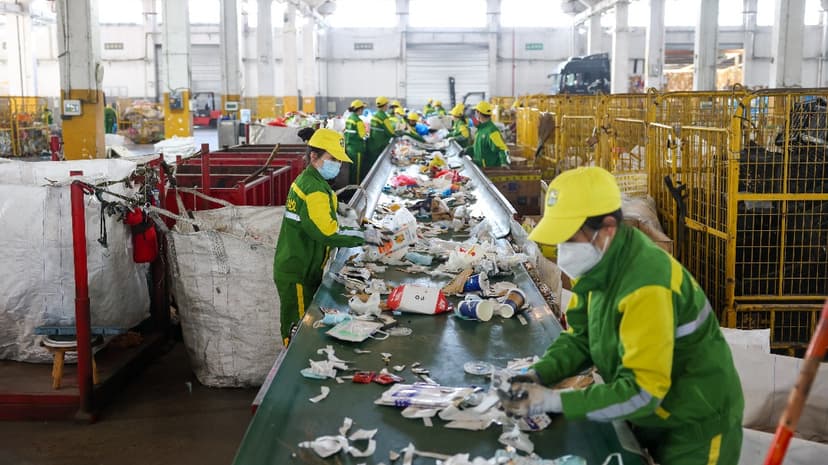
In Hangzhou, East China's Zhejiang province, a novel waste recycling service allows residents to convert cardboard and plastics into "eco-credits." These credits can then be used to purchase groceries, integrating sustainability into daily life. Launched in 2022, this platform serves 559,000 households across the Yuhang and Linping districts.
The initiative has successfully recovered around 400,000 metric tons of recyclable materials, contributing to a notable reduction in the city's overall waste. As of 2024, Hangzhou's daily waste per capita decreased to 0.99 kilograms from 1.06 kilograms in 2021. This achievement is particularly significant as the city of 8.75 million maintains strong economic growth.
Hangzhou's commitment to environmental governance and waste reduction earned it a spot among the United Nations' top 20 Zero Waste Cities in January. China's broader zero-waste city initiative, started in 2018, aims for 60 percent of its cities to adopt zero-waste development by 2027, with nationwide coverage expected by 2035.
Experts like Zhang Xueliang from Shanghai University of Finance and Economics highlight that such initiatives are reshaping urban governance and lifestyles, driving a circular, low-carbon development model. Building low-carbon cities is now a core priority for urban growth, with green development symbolizing high-quality development.