

Home / Environment / Gurgaon Air Network Gets Major Overhaul
Gurgaon Air Network Gets Major Overhaul
21 Apr
Summary
- Air monitoring station will move to Bhondsi to avoid overlapping readings.
- Five new real-time monitoring stations to be installed by July-end.
- Current network's sparse spread leaves large parts of Gurgaon unassessed.
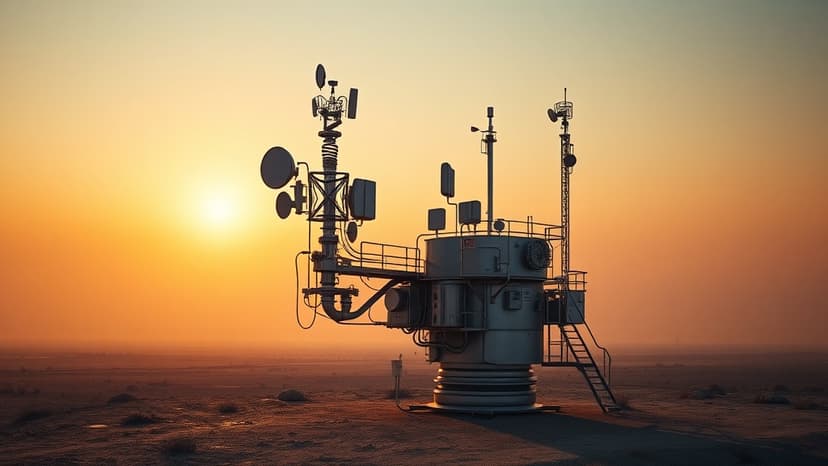
Gurgaon's air quality monitoring system is being recalibrated, with the station at Teri Gram set to move to Bhondsi. This relocation aims to correct overlapping readings from the Aravali belt and measure pollution from a distinct land-use zone.
Currently, Gurgaon operates five air monitoring stations. The move to Bhondsi, a peri-urban area, is intended to improve data accuracy. This is part of an expansion plan that will introduce five new real-time monitoring stations by July-end, bringing the total to ten. However, experts caution that this relocation might artificially lower average pollution levels without a true improvement in urban air quality.
Concerns have been raised about the current grid's sparse coverage, which is roughly 732 sq km, leaving newer sectors and fringe areas unmonitored. Past incidents, like stations going offline due to technical issues, have previously skewed Gurgaon's air quality index. The addition of stations at locations like Tau Devi Lal Park and Leisure Valley Park is expected to improve the network's representativeness.
Even with the planned expansion, Gurgaon's network will remain below the benchmark recommended for cities of its size. Delhi, for comparison, operates around 40 stations. Experts view the current plan as a necessary course correction, though gaps in monitoring high-exposure areas may persist. The expanded network is anticipated to lead to stricter actions on emission sources.
