feedzop-word-mark-logo
searchLogin
Feedzop
homeFor YouUnited StatesUnited States
You
bookmarksYour BookmarkshashtagYour Topics
Trending
Terms of UsePrivacy PolicyAboutJobsPartner With Us

© 2026 Advergame Technologies Pvt. Ltd. ("ATPL"). Gamezop ® & Quizzop ® are registered trademarks of ATPL.

Gamezop is a plug-and-play gaming platform that any app or website can integrate to bring casual gaming for its users. Gamezop also operates Quizzop, a quizzing platform, that digital products can add as a trivia section.

Over 5,000 products from more than 70 countries have integrated Gamezop and Quizzop. These include Amazon, Samsung Internet, Snap, Tata Play, AccuWeather, Paytm, Gulf News, and Branch.

Games and trivia increase user engagement significantly within all kinds of apps and websites, besides opening a new stream of advertising revenue. Gamezop and Quizzop take 30 minutes to integrate and can be used for free: both by the products integrating them and end users

Increase ad revenue and engagement on your app / website with games, quizzes, astrology, and cricket content. Visit: business.gamezop.com

Property Code: 5571

Home / Environment / Tajikistan Ice Cap Thrives Amidst Warming

Tajikistan Ice Cap Thrives Amidst Warming

7 Jan

•

Summary

  • A rare high-altitude ice cap in Tajikistan's Pamir Mountains is growing larger.
  • Scientists are analyzing ice cores from the Kon-Chukurbashi ice cap for climate data.
  • Even this resilient ice cap is now threatened by decreasing snowfall and warming.

Tajikistan Ice Cap Thrives Amidst Warming

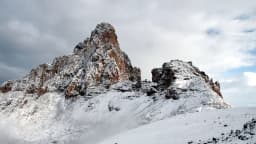
Glaciers across the globe are rapidly disappearing, serving as stark evidence of climate change. However, the Kon-Chukurbashi high-altitude ice cap in Tajikistan's Pamir Mountains has defied this trend, exhibiting growth for decades. This anomaly has prompted international scientists to collect extensive ice core samples for analysis, seeking to understand its unique resilience.

An expedition successfully secured two 100-meter ice cores. One is preserved in Antarctica's Ice Memory Foundation, while the other is undergoing analysis in Japan. Scientists, including Professor Yoshinori Iizuka, hope that understanding this ice cap's growth mechanism could offer insights for preserving other glaciers worldwide. The ice cores contain up to 30,000 years of atmospheric data.

trending

Salt Lake City funeral shooting

trending

Roblox mandates age verification

trending

Warriors beat Bucks at home

trending

Amazon Prime settlement refunds

trending

Elle Simone Scott dies at 49

trending

Raptors beat Hornets at buzzer

trending

Hawks might trade Trae Young

trending

Gilgeous-Alexander questionable versus Jazz

trending

Magic beat Nets at buzzer

Despite its past resilience, recent research suggests the Kon-Chukurbashi ice cap and the broader Pamir region are now under severe threat. A study published earlier this year indicated a significant tipping point for glaciers like Kyzylsu, noting a decrease in recent snowfall. This indicates that even the world's glacial strongholds are struggling to withstand the rapid warming driven by climate change.

Disclaimer: This story has been auto-aggregated and auto-summarised by a computer program. This story has not been edited or created by the Feedzop team.
The Kon-Chukurbashi ice cap is unusual because, unlike most glaciers globally, it has been growing in size for decades.
Scientists hope to understand the mechanism behind the ice cap's growth to potentially apply this knowledge to other melting glaciers.
Recent studies suggest that even this resilient ice cap is now threatened by decreased snowfall and rapid warming.

Read more news on

Environmentside-arrowAntarcticaside-arrow

You may also like

Africa's Glaciers Vanishing Within Years

5 Jan • 44 reads

article image

Japan's Aging Infrastructure Crumbles Under Disasters

1 Jan • 36 reads

article image

Japan Jolted: 6.0 Quake Strikes Off Noda Coast

1 Jan • 41 reads

article image

Thwaites Glacier: A Ticking Time Bomb Beneath Antarctica?

1 Jan • 42 reads

article image

Climate Disasters: $120 Billion Lost in 2025

27 Dec, 2025 • 116 reads

article image