Home / Environment / Deserts Bloom: Nature's Greener, Arid Secrets
Deserts Bloom: Nature's Greener, Arid Secrets
8 Mar
Summary
- Thar Desert green cover surged by 38% due to rainfall and agriculture.
- Sahel region shows increased vegetation from rising CO2 levels.
- Advanced irrigation transforms Israel's Negev into a fertile-looking desert.
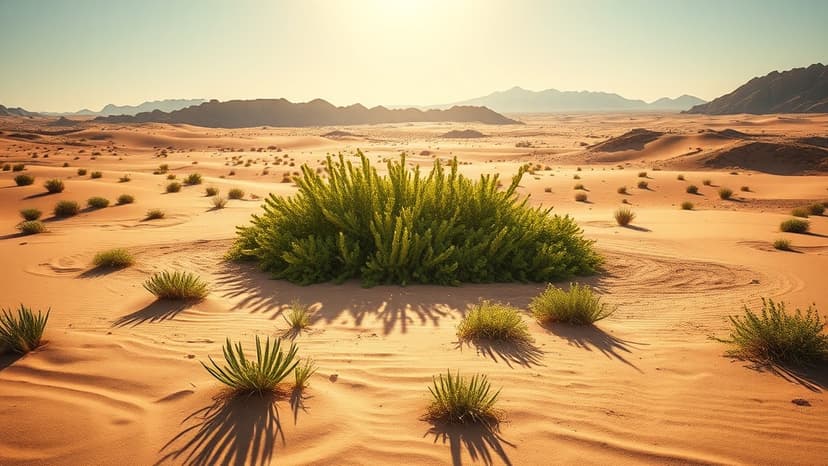
Certain desert regions defy conventional images, presenting lush greenery despite minimal rainfall. These areas, which scientifically remain arid, showcase nature's remarkable adaptability through unique ecosystems, climate changes, and human efforts.
The Thar Desert in India has experienced a significant transformation, with its green cover increasing by 38% over the past two decades. This expansion is attributed to more consistent monsoon rainfall and the growth of agricultural practices, integrating farmland and settlements within its arid landscape.
In Africa, the Sahel region, bordering the Sahara, displays enhanced vegetation. This growth is linked to rising atmospheric CO2 levels, which promote plant development even in dry conditions. Though greener, the Sahel continues to face the typical challenges of water scarcity and fragile soils.
Israel's Negev Desert has been revitalized through sophisticated micro-irrigation, enabling the cultivation of farms and vineyards. From afar, sections appear as fertile land, a stark contrast to its hyper-arid climate. Similarly, Oregon's High Desert in the U.S. features juniper and sagebrush, offering a green appearance due to hardy native plants and winter snowfall.
Chile and Peru's Atacama Desert hosts unique fog oases, or lomas, where inland-drifting coastal fog sustains vegetation, creating 'islands' of life in an otherwise barren environment. These diverse examples illustrate that deserts are far more varied than commonly perceived.