Home / Environment / Lake Whitefish Vanish: Invasive Mussels Blamed
Lake Whitefish Vanish: Invasive Mussels Blamed
29 Jul
Summary
- Invasive mussels are causing a drastic decline in lake whitefish populations.
- Native communities face economic hardship due to the fish's disappearance.
- Researchers are exploring solutions, including fish and biological controls.
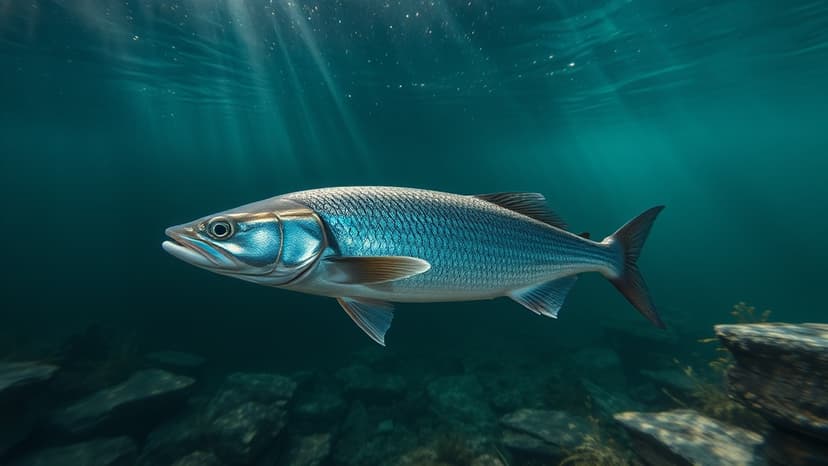
Lake whitefish, once a celebrated delicacy and integral to Native American traditions, are facing a severe population crash across the Great Lakes. Historical accounts from 1888 already lauded Sandusky, Ohio, as a major fish market, with whitefish as a centerpiece. However, by the 1990s, a drastic decline in juvenile whitefish numbers began, baffling scientists at the time.
Researchers now attribute this collapse to the proliferation of invasive quagga and zebra mussels. These mussels consume phytoplankton, the primary food source for diporeia, a crucial crustacean that whitefish fingerlings depend on. This has created a calamitous chain reaction, leading to starvation for young whitefish.
The impact is devastating for indigenous communities like the Little Traverse Bay Bands of Odawa Indians, for whom whitefish fishing is a primary source of income. Commercial fishing hauls have plummeted, making it difficult to sustain livelihoods, a stark contrast to past abundance.
Efforts to combat the invasive mussels are underway, including the use of freshwater drum, which prey on mussels, and localized treatments with carbon dioxide and high-pressure water. However, the immense scale and cost of these methods present significant hurdles for widespread application.
Legislation has been proposed in the U.S. Congress to allocate $50 million annually for a decade to fund research and control measures for invasive mussels. This mirrors past successful efforts against sea lampreys, with hopes for a similar "silver bullet" solution, though significant challenges remain in tackling quadrillions of mussels across vast freshwater systems.


