Home / Environment / Great Indian Bustard Population Stable, But Habitat Shrinks
Great Indian Bustard Population Stable, But Habitat Shrinks
10 Jul
Summary
- Great Indian Bustard population remains stable at 110-150 birds.
- The critically endangered bird now occupies only 16% of its potential habitat.
- Collisions with power lines pose a significant mortality risk to GIBs.
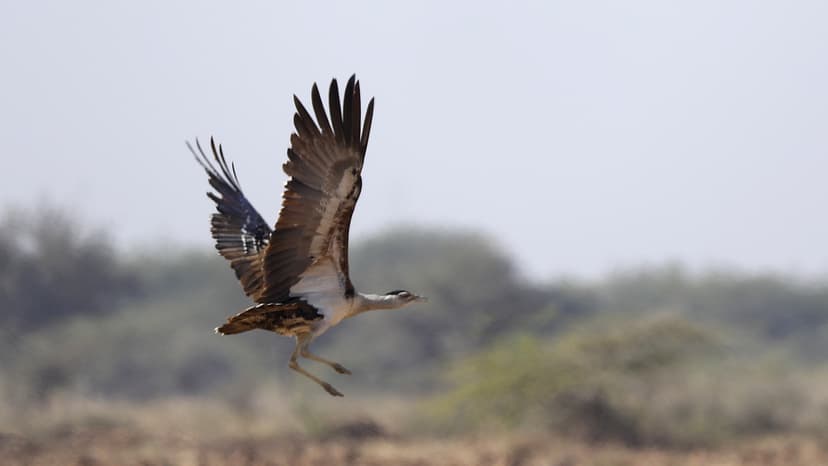
The population of the critically endangered Great Indian Bustard (GIB) has remained stable, with the latest assessment estimating between 110 and 150 birds. This first official count in seven years indicates stability since 2017-18, with the current estimate at 130 birds. Despite this stability, the GIB is now restricted to only 16% of its potential habitat within Rajasthan's Thar desert.
The primary habitats for the GIB are flat grasslands in Jaisalmer district, particularly near the Desert National Park and Pokhran Range. These areas are largely free from human settlements and renewable energy infrastructure. However, the expansion of power lines, agriculture, roads, and solar plants has intensified habitat fragmentation and increased mortality risks for the birds.
Collisions with power transmission lines, a recent and significant threat, contribute to GIB mortality due to the bird's poor frontal vision. To address this, the Supreme Court mandated protection measures, including dedicated power line corridors and undergrounding lines in specific stretches. Conservation projects, such as Project GIB, are underway with national and international support to improve GIB habitat and mitigate threats.


