Home / Environment / Geese Grazing: Timing is Everything for Wheat Yields
Geese Grazing: Timing is Everything for Wheat Yields
28 Jul
Summary
- Spring grazing consistently reduces wheat yields by 7% to 10%.
- Winter grazing alone causes no significant loss in grain harvests.
- Wheat grazed in late spring has reduced grain nitrogen content.
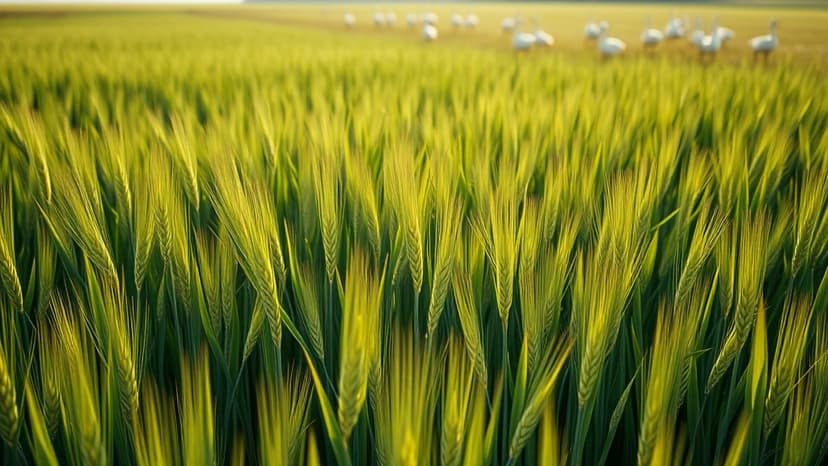
Migratory geese in Denmark have a significant impact on winter wheat fields, but a recent study clarifies when the damage truly occurs. Research published in Springer Nature indicates that while geese strip fields bare during winter, the primary threat to harvests lies in their continued feeding into late spring. Intensive grazing during the winter months alone did not result in statistically significant reductions in grain yields.
The study, which combined farm observations with controlled experiments, found that grazing extending into late spring consistently reduced wheat yields by approximately 7% to 10%. This timing difference is crucial, as wheat can recover lost biomass during its dormant winter phase. However, by late spring, grazing interferes with critical grain formation stages.
Furthermore, spring grazing was found to decrease the grain's nitrogen content, potentially affecting the quality of wheat used for animal feed. An unexpected finding was that winter grazing might encourage geese to return in spring, as it keeps the wheat crop shorter and more appealing during vulnerable growth periods.


