

Home / Environment / Endangered Guitarfish Fights for Survival in Goa
Endangered Guitarfish Fights for Survival in Goa
14 Apr
Summary
- Widenose guitarfish population is declining due to bycatch in fishing nets.
- Researchers and forest department collaborate on long-term conservation study.
- Catching, selling, or consuming the fish is a criminal offense since 2024.
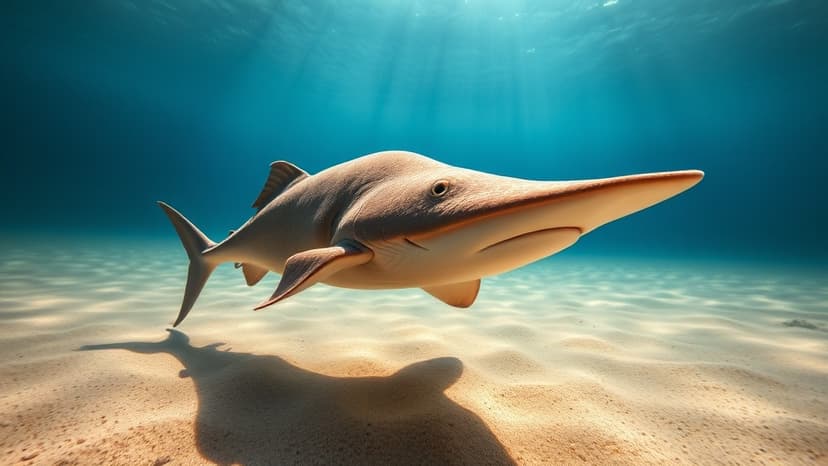
The widenose guitarfish, a critically endangered species, is facing significant population decline in Goa, largely due to being unintentionally caught in fishing nets as bycatch. Although not a commercially targeted fish, its survival is threatened by this extraneous factor. Recognizing the severity, researchers are partnering with the forest department on a long-term project to monitor guitarfish populations along Goa's coast and develop conservation strategies.
In a significant boost for its protection, the Union government included the widenose guitarfish in Schedule 1 of the Wildlife Act, 1972, just over two years ago. This legislation makes catching, selling, or consuming the fish a criminal offense. Conservationists point to coastal development and pollution as potential causes of habitat degradation, further imperiling the species. The inclusion of Talpona and Galgibaga beaches as important shark and ray areas by the IUCN suggests these sites offer crucial foraging and shelter habitats for elasmobranchs, including guitarfish.
Conservation efforts are focusing on understanding the distribution of guitarfish and implementing effective strategies. Marine biologist Bryan Miranda highlighted that identifying critical guitarfish habitats across Goa is a primary step. Additionally, the species' ability to survive out of water for a period is being considered in developing conservation measures, including sensitizing stakeholders to promote live release. Fisheries scientist G.B. Sreekanth emphasized the need for comprehensive study and conservation of all elasmobranch species inhabiting coastal ecosystems.
