Home / Environment / NZ's 'Ugly God' Insect: A National Treasure
NZ's 'Ugly God' Insect: A National Treasure
26 Jan
Summary
- Giant Wētā, nicknamed 'God of ugly things,' are national treasures.
- Strict laws prevent buying, selling, or owning these massive insects.
- Conservation efforts include captive breeding and predator-free islands.
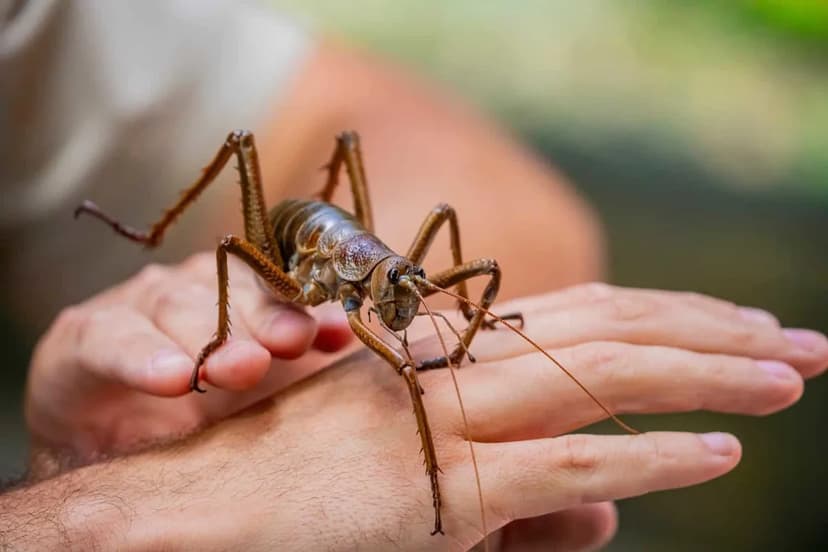
New Zealand is home to the extraordinary Giant Wētā, an insect group often called the "God of ugly things" and officially designated as a national treasure.
These massive, flightless crickets are endemic to New Zealand's outlying islands. Some species, like the Little Barrier Island giant wētā (Wētāpunga), can weigh as much as a sparrow, making them some of the heaviest insects globally.
Despite their intimidating appearance and names, Giant Wētā are generally passive herbivores or scavengers. They exhibit island gigantism, growing large due to a lack of mainland predators.
Historically, their size was a defense mechanism, but the introduction of invasive species and habitat destruction led to significant population declines. Climate change also poses a threat to their natural environments.
New Zealand enforces robust conservation laws, such as the Wildlife Act 1953, to protect all Giant Wētā species. It is illegal to remove them from the wild or possess them without a permit, reinforcing their status as public heritage.
Through initiatives like the Auckland Zoo's captive breeding program and the Museum of New Zealand's research collections, efforts are underway to ensure the species' survival. Mature Giant Wētā are released onto predator-free islands, securing their future.