feedzop-word-mark-logo
searchLogin
Feedzop
homeFor YouUnited StatesUnited States
You
bookmarksYour BookmarkshashtagYour Topics
Trending
Terms of UsePrivacy PolicyAboutJobsPartner With Us

© 2026 Advergame Technologies Pvt. Ltd. ("ATPL"). Gamezop ® & Quizzop ® are registered trademarks of ATPL.

Gamezop is a plug-and-play gaming platform that any app or website can integrate to bring casual gaming for its users. Gamezop also operates Quizzop, a quizzing platform, that digital products can add as a trivia section.

Over 5,000 products from more than 70 countries have integrated Gamezop and Quizzop. These include Amazon, Samsung Internet, Snap, Tata Play, AccuWeather, Paytm, Gulf News, and Branch.

Games and trivia increase user engagement significantly within all kinds of apps and websites, besides opening a new stream of advertising revenue. Gamezop and Quizzop take 30 minutes to integrate and can be used for free: both by the products integrating them and end users

Increase ad revenue and engagement on your app / website with games, quizzes, astrology, and cricket content. Visit: business.gamezop.com

Property Code: 5571

Home / Environment / Giant 'Flying Bulldog' Bee Rediscovered

Giant 'Flying Bulldog' Bee Rediscovered

1 Jan

•

Summary

  • The world's largest bee, Wallace's Giant Bee, was rediscovered in 2019.
  • Females reach 1.5 inches, with a wingspan of 2.5 inches, possessing large mandibles.
  • This solitary bee nests in active termite mounds, using tree resin for protection.
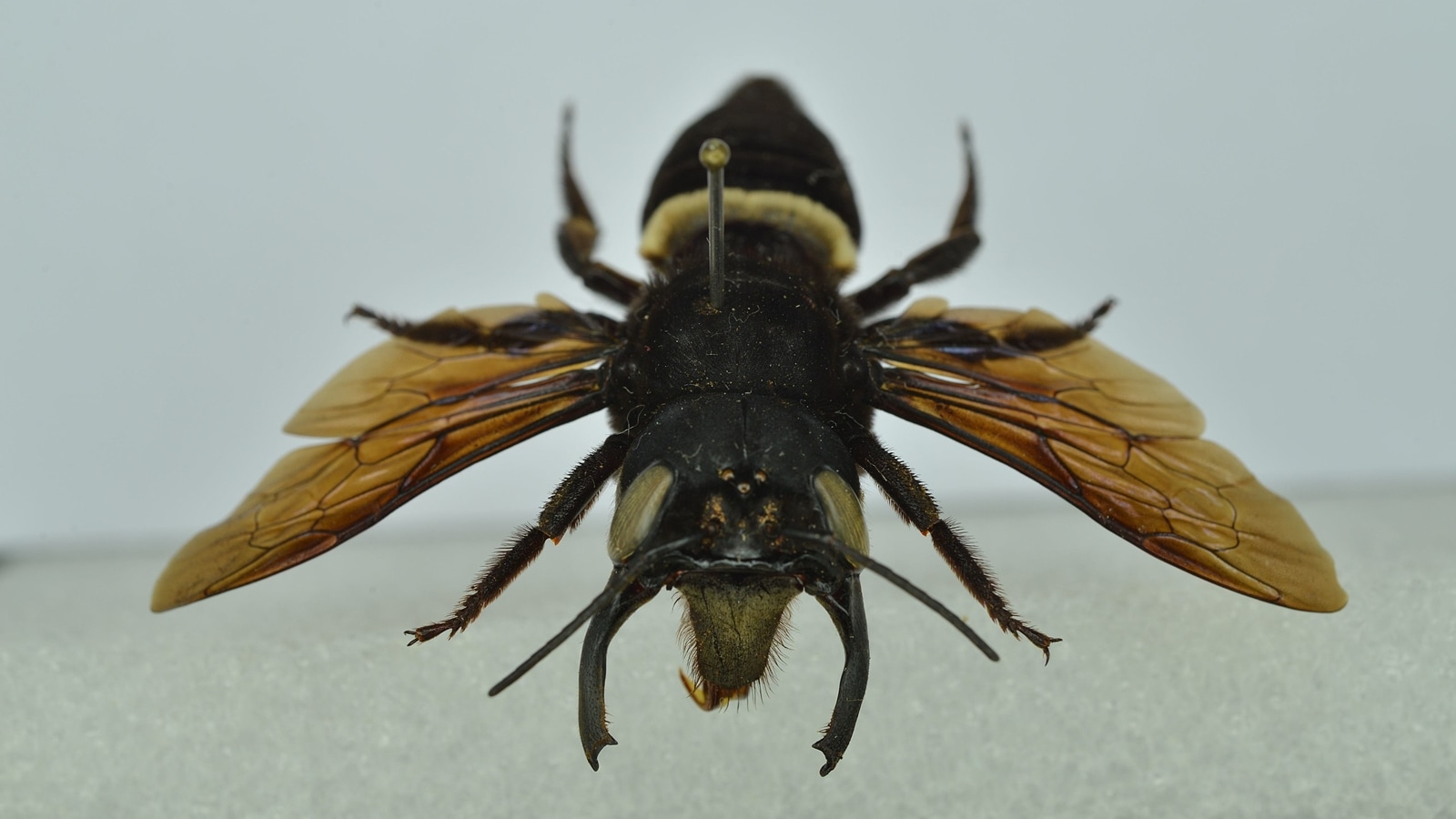
Giant 'Flying Bulldog' Bee Rediscovered

The world's largest bee, Wallace's Giant Bee (Megachile pluto), has been rediscovered in Indonesia's North Moluccas. First documented over 160 years ago by Alfred Russel Wallace, this 'flying bulldog' bee had eluded scientists for decades, with its last confirmed sighting before 2019 being in 1981. Its rediscovery in 2019 by a GWC initiative sparked global scientific excitement.

This remarkable insect is distinguished by its impressive size, with females measuring up to 1.5 inches long and possessing a 2.5-inch wingspan and formidable mandibles. Unlike hive-dwelling bees, Wallace's Giant Bee is solitary and constructs its nests within active termite mounds. It meticulously scrapes tree resin to line these chambers, creating a secure, waterproof environment for itself and its young.

Wallace's Giant Bee is classified as 'Vulnerable' due to threats including habitat loss from deforestation, logging, and agriculture. Concerns about illegal wildlife trade also persist, evidenced by a specimen previously listed for $9,100 online. Conservation efforts are crucial to protect this unique species and its fragile lowland forest habitat.

trending

Bears stun Green Bay Packers

trending

Grateful Dead's Bob Weir dies

trending

NFL playoffs wild card weekend

trending

NFL playoff bracket updated

trending

Alex Bregman joins Chicago Cubs

trending

Sabres beat Ducks, win streak

trending

Hornets rout Jazz 150-95

trending

Lightning beat Flyers 7-2

trending

Kentucky narrowly beats Mississippi State

Disclaimer: This story has been auto-aggregated and auto-summarised by a computer program. This story has not been edited or created by the Feedzop team.
Wallace's Giant Bee is the world's largest bee, measuring up to 1.5 inches. It's nicknamed 'flying bulldog' due to its large size, intimidating buzz, muscular build, and oversized mandibles.
Wallace's Giant Bee lives exclusively in lowland forests in Indonesia's North Moluccas. Uniquely, it nests inside active termite mounds, using tree resin to line the chambers.
Wallace's Giant Bee was rediscovered in 2019 after being missing for decades. It is currently classified as 'Vulnerable' by the IUCN Red List due to habitat loss and other threats.

Read more news on

Environmentside-arrowIndonesiaside-arrow

You may also like

Wallace & Gromit Queues: Museum Limits Access

3 Jan • 19 reads

article image

Marsh Birds Meet Garbage: A Polluted Paradise Found

18 Dec, 2025 • 100 reads

article image

Zootopia 2 Inspires Venomous Snake Pet Trend in China

16 Dec, 2025 • 117 reads

article image

Arctic Thaw: Hunter's Fear for Culture

13 Dec, 2025 • 169 reads

article image

New Snake & Bird Species Discovered Amidst Island Project

30 Nov, 2025 • 165 reads

article image