Home / Environment / Giant 'Flying Bulldog' Bee Rediscovered
Giant 'Flying Bulldog' Bee Rediscovered
1 Jan
Summary
- The world's largest bee, Wallace's Giant Bee, was rediscovered in 2019.
- Females reach 1.5 inches, with a wingspan of 2.5 inches, possessing large mandibles.
- This solitary bee nests in active termite mounds, using tree resin for protection.
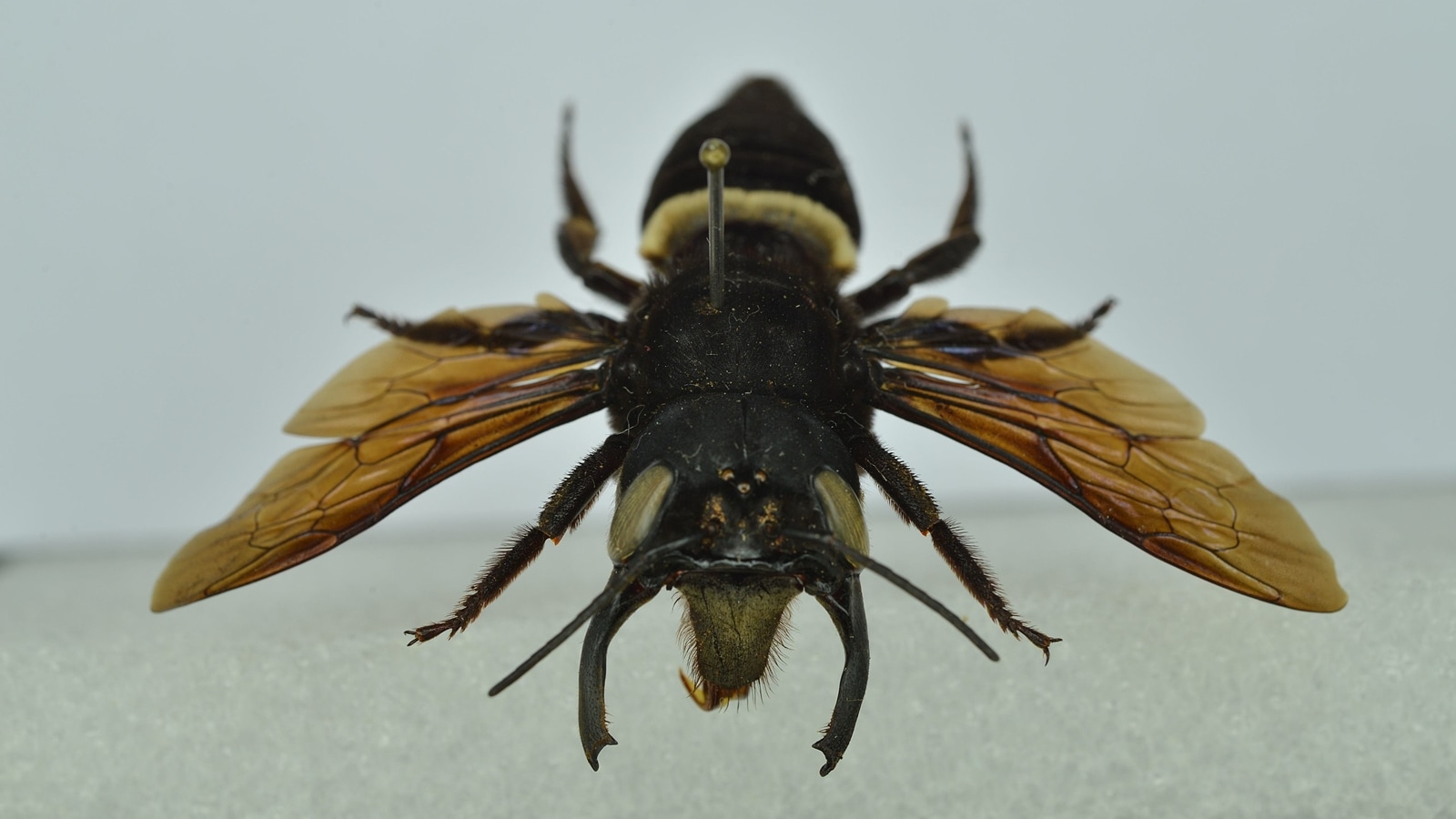
The world's largest bee, Wallace's Giant Bee (Megachile pluto), has been rediscovered in Indonesia's North Moluccas. First documented over 160 years ago by Alfred Russel Wallace, this 'flying bulldog' bee had eluded scientists for decades, with its last confirmed sighting before 2019 being in 1981. Its rediscovery in 2019 by a GWC initiative sparked global scientific excitement.
This remarkable insect is distinguished by its impressive size, with females measuring up to 1.5 inches long and possessing a 2.5-inch wingspan and formidable mandibles. Unlike hive-dwelling bees, Wallace's Giant Bee is solitary and constructs its nests within active termite mounds. It meticulously scrapes tree resin to line these chambers, creating a secure, waterproof environment for itself and its young.
Wallace's Giant Bee is classified as 'Vulnerable' due to threats including habitat loss from deforestation, logging, and agriculture. Concerns about illegal wildlife trade also persist, evidenced by a specimen previously listed for $9,100 online. Conservation efforts are crucial to protect this unique species and its fragile lowland forest habitat.