Home / Environment / Ghost Crab Hunts Rocky Dweller: First Sighting!
Ghost Crab Hunts Rocky Dweller: First Sighting!
4 Dec
Summary
- Horn-eyed ghost crab preyed on mottled lightfoot crab.
- This event occurred on Rushikonda shoreline.
- Researchers noted a significant behavioral extension.
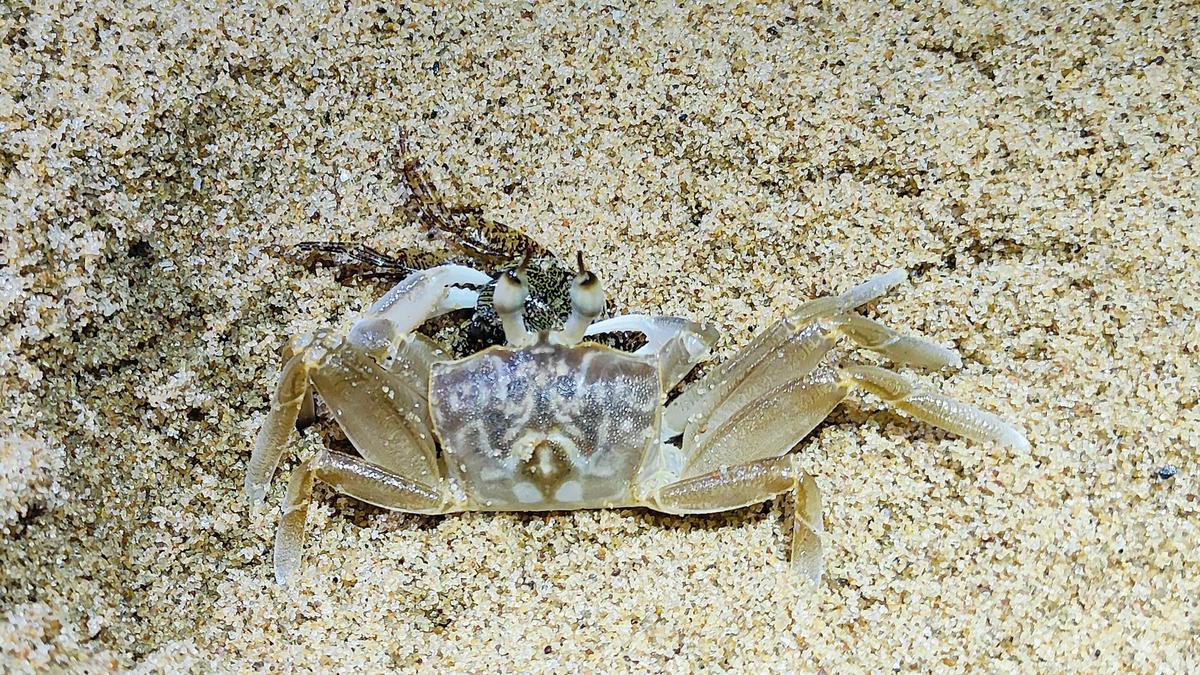
Researchers from GITAM School of Science in Visakhapatnam have recorded a remarkable event on the Rushikonda shoreline: a horn-eyed ghost crab was observed preying on a mottled lightfoot crab. This marks the first confirmed instance of such predation, challenging previous assumptions about the ghost crab's habitat and diet. The observation suggests a behavioral shift, with the sand-dwelling ghost crab venturing into rocky areas typically occupied by the lightfoot crab.
The significance of this finding lies in the implied geographical overlap and behavioral plasticity of the horn-eyed ghost crab. While generally confined to sandy intertidal zones, this predation suggests an adaptation to utilize prey found in adjacent rocky crevices. This flexibility may be influenced by environmental factors or prey availability, indicating that generalist predators can adjust their foraging strategies.
This unique interaction, documented during a routine field visit, underscores the dynamic nature of coastal ecosystems. Scientists emphasize the need for further sustained observations to determine if this is an isolated incident or indicative of an emerging pattern. Such studies are crucial for understanding how coastal species respond to environmental changes.