

Home / Environment / Sea Turtle Haven Vanishes: Erosion Devours Gahirmatha Beaches
Sea Turtle Haven Vanishes: Erosion Devours Gahirmatha Beaches
16 Apr
Summary
- Severe coastal erosion has submerged nesting islands in Gahirmatha.
- Nasi-1 island shrunk from 1.5 km to 100m due to erosion.
- Coastal erosion has caused 23.4% of Odisha's shoreline to erode.
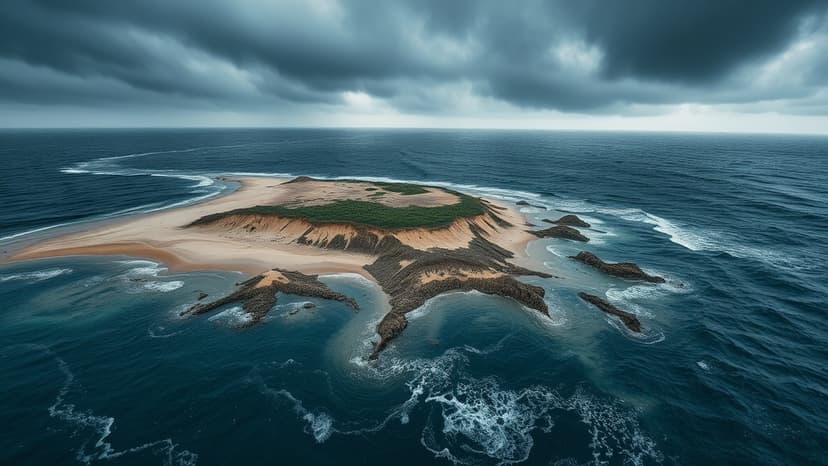
Coastal erosion has significantly impacted the Nasi-1 and Nasi-2 islands within the Gahirmatha Marine Sanctuary, causing the submergence of crucial nesting grounds for Olive Ridley sea turtles. This environmental degradation has resulted in a delay of the mass nesting events at what is considered the world's largest rookery for these turtles.
Historically, these uninhabited islands were renowned nesting sites. However, continuous erosion over two decades has drastically reduced their size. Nasi-1 island, which once spanned 1.5 km, has shrunk to just 100m, while Nasi-2 has diminished from 2 km to 300m. The beaches have also become steep, with a 90-degree vertical incline, making it difficult for turtles to access nesting areas.
This erosion has also affected other nesting sites, with the Agranasi island completely vanishing five years ago. While Eakakulanasi beach has shown recent accretion, the overall situation remains concerning. A study by the National Centre for Coastal Research revealed that between 1990 and 2018, 23.4% of Odisha's shoreline experienced erosion, impacting vital coastal ecosystems.
