Home / Environment / Fukushima's Mutants: Radioactive Pigs Boast New Powers
Fukushima's Mutants: Radioactive Pigs Boast New Powers
20 May
Summary
- Mutant pigs near Fukushima exhibit extraordinary traits due to radiation.
- Hybrid pigs inherit domestic sows' rapid reproduction, speeding population growth.
- Findings suggest maternal lineage drives generation turnover in mutated pigs.
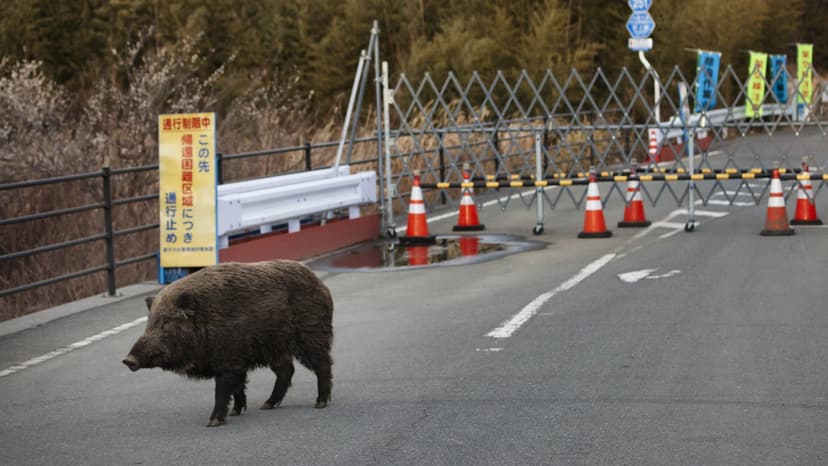
Mutated radioactive pigs have emerged near the Fukushima Daiichi Power Plant in Japan, displaying unique traits. Following the 2011 disaster, abandoned domestic pigs interbred with wild boars, creating a new hybrid population. Researchers discovered these hybrid pigs inherit the rapid, year-round reproductive cycle of domestic sows, unlike wild boars that reproduce annually.
This inherited maternal trait allows the mutant pig population to multiply extremely quickly, a phenomenon previously unobserved on this scale. The accelerated generational turnover could significantly impact population dynamics. This finding has broader implications, as similar hybridization events occur worldwide between feral pigs and wild boars.
The impact of radioactive contamination on these evolving populations is a subject of ongoing study. In 2017, hunters were deployed to manage a surge of radioactive wild boars within the Fukushima exclusion zone, highlighting the challenges posed by these animals.


