Home / Environment / Florida's Lovebug Swarms: Your Car's Worst Nightmare
Florida's Lovebug Swarms: Your Car's Worst Nightmare
8 Sep
Summary
- Lovebugs are flies that appear in swarms for a few weeks each spring and fall.
- Their remains can damage car paint if not cleaned off within 24 hours.
- Lovebugs are attracted to car exhaust, heat, and light-colored surfaces.
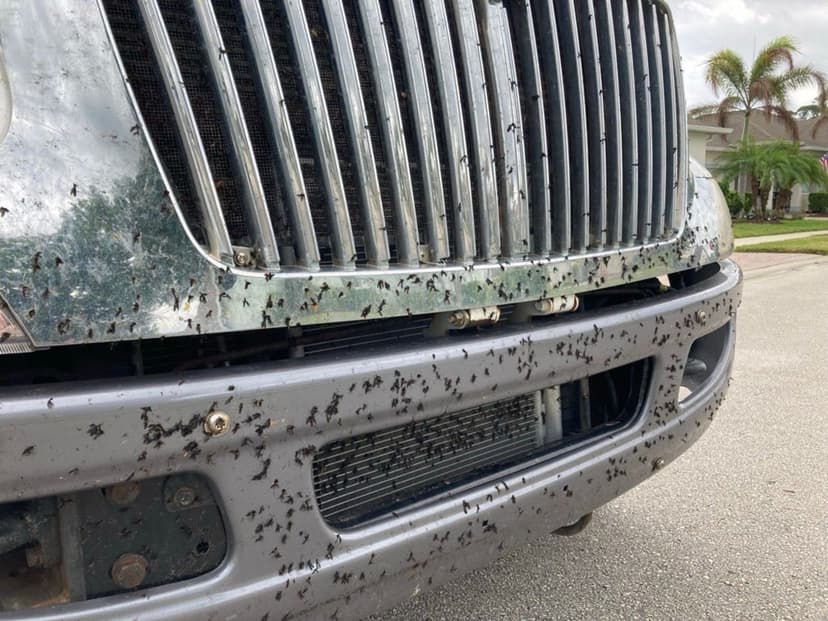
Florida drivers are contending with the return of lovebugs, a flying insect that congregates in massive swarms, particularly along highways. These insects, known for their tendency to splatter across vehicle windshields and grills, pose a significant nuisance and potential threat to car paint. If not removed promptly, typically within 24 hours, their remains can cause damage.
Lovebugs, which are related to mosquitoes and gnats, appear in large numbers for brief periods each April-May and August-September. They are drawn to compounds in automobile exhaust fumes and the heat radiating from roads, along with light-colored, shiny surfaces. While adult lovebugs live only a few days, females lay numerous eggs that hatch in about 20 days.
Fortunately, lovebugs do not bite, sting, or transmit diseases. However, their sheer numbers can create hazardous driving conditions by obscuring visibility. Effective removal methods include using wet dryer sheets, hot water, soap, and specialized cleaning products. Drivers are cautioned against using windshield wipers to clear the insects, as this can worsen visibility. Lovebug populations have generally decreased in Florida over the past four years, though the reason remains unknown.


