Home / Environment / Florida Keys: Sunken Ship Becomes Thriving Underwater Habitat
Florida Keys: Sunken Ship Becomes Thriving Underwater Habitat
24 Aug
Summary
- The Thunderbolt, a former military vessel, now serves as an artificial reef.
- It was deliberately sunk in 1986 off Marathon in the Florida Keys.
- Marine organisms have colonized the wreck, creating a vibrant habitat.
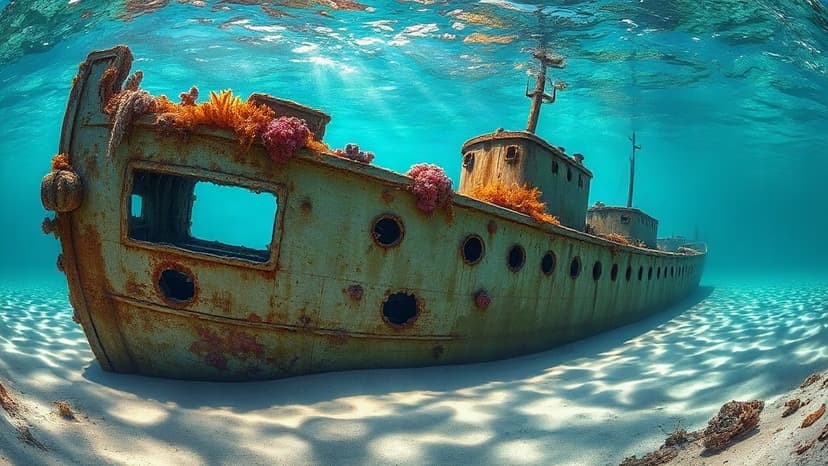
Originally launched in 1942 as the Major General Wallace F. Randolph, a World War II vessel for planting coastal minefields, the ship later served Florida Power and Light for lightning research under the name Thunderbolt. In 1986, this former military and research vessel was intentionally sunk approximately four miles south of Marathon in the Florida Keys to establish an artificial reef.
Nearly four decades after its sinking on March 6, 1986, the 189-foot Thunderbolt has become a flourishing marine habitat. Its structure, which rises from about 120 feet to around 75 feet below the surface, is now covered in sponges, corals, and hydroids. The vessel's remnants, including its cable-handling reel and superstructure, offer crucial shelter and surfaces for various underwater organisms.
Artificial reefs, human-made structures mimicking natural habitats, are vital for marine ecosystems. Ships like the Thunderbolt, with their complex structures, create essential spaces for marine life. The transformation of this former industrial vessel into a thriving underwater community highlights the successful integration and ecological benefits of well-planned artificial reef projects.


