feedzop-word-mark-logo
searchLogin
Feedzop
homeFor YouUnited StatesUnited States
You
bookmarksYour BookmarkshashtagYour Topics
Trending
Terms of UsePrivacy PolicyAboutJobsPartner With Us

© 2026 Advergame Technologies Pvt. Ltd. ("ATPL"). Gamezop ® & Quizzop ® are registered trademarks of ATPL.

Gamezop is a plug-and-play gaming platform that any app or website can integrate to bring casual gaming for its users. Gamezop also operates Quizzop, a quizzing platform, that digital products can add as a trivia section.

Over 5,000 products from more than 70 countries have integrated Gamezop and Quizzop. These include Amazon, Samsung Internet, Snap, Tata Play, AccuWeather, Paytm, Gulf News, and Branch.

Games and trivia increase user engagement significantly within all kinds of apps and websites, besides opening a new stream of advertising revenue. Gamezop and Quizzop take 30 minutes to integrate and can be used for free: both by the products integrating them and end users

Increase ad revenue and engagement on your app / website with games, quizzes, astrology, and cricket content. Visit: business.gamezop.com

Property Code: 5571

Home / Environment / Solar Farms Bloom: Desert Plants Thrive

Solar Farms Bloom: Desert Plants Thrive

30 Jan

•

Summary

  • Solar farms can support native plants and wildlife, a technique called ecovoltaics.
  • A rare desert plant saw significant growth at a Las Vegas solar project.
  • Ecovoltaics offers an alternative to disruptive 'blade and grade' construction.
Solar Farms Bloom: Desert Plants Thrive

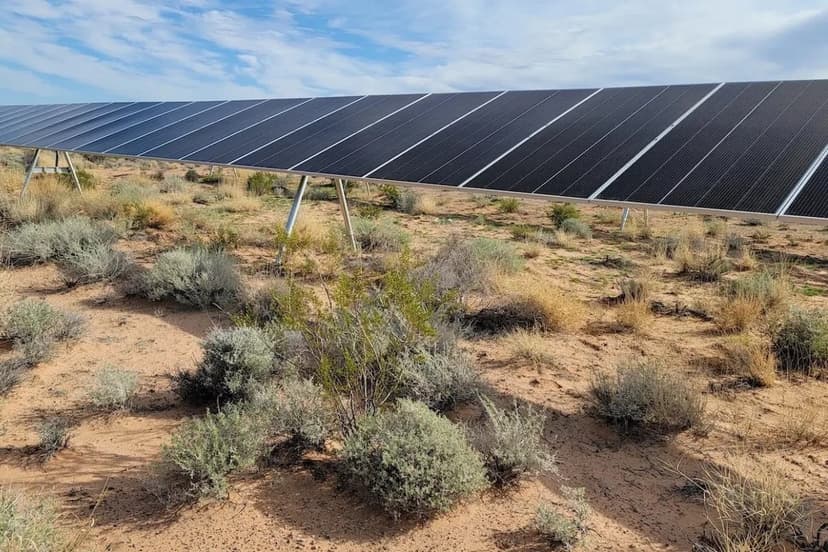
Solar farms are increasingly being designed with nature in mind, a practice known as ecovoltaics. This approach aims to support biodiversity rather than disrupt ecosystems. A recent study highlighted the success of this method at the Gemini Solar Project near Las Vegas.

Before the project, only 12 rare threecorner milkvetch plants were found on the site. Following construction using a gentler approach, scientists documented 93 plants in 2026. These plants also grew larger and produced more flowers and fruits compared to those in a control area.

Experts suggest that the solar panels provide shade, reducing soil evaporation and making more water available for plant growth. This contrasts with traditional "blade and grade" methods that clear vegetation and disrupt the soil's seed bank. Ecovoltaics also involves seeding disturbed areas with native grasses and flowers.

trending

Ohio snow emergency declared

trending

TikTok down in United States

trending

Andreeva matches Venus Williams' feat

trending

Warrington Hospital baby death

trending

Alexander Zverev advances in Australia

trending

Oilers host Capitals

trending

London celebrates Chinese New Year

trending

Liza Minnelli defends AI use

Studies in Minnesota have shown significant increases in plant species and insect pollinators at solar sites. Researchers observed a sevenfold rise in unique flowering plant species and a threefold increase in pollinators. These sites also attracted grassland birds and bats, likely due to the abundance of insects.

Optimizing ecovoltaics involves considering factors like panel height and shade to suit specific plant needs. Some plants thrive in direct sun between panels, while others may prefer shade. Panel height can also accommodate conservation grazing by livestock like sheep and goats, which helps manage invasive weeds and reduces fire risk.

This environmentally conscious approach to solar development offers a stark contrast to the destructive "blade and grade" method. By preserving root structures, ecovoltaics helps prevent soil erosion and discourages the spread of invasive species. The practice also extends to agrivoltaics, where crops can be grown alongside solar panels, further enhancing land use efficiency.

Disclaimer: This story has been auto-aggregated and auto-summarised by a computer program. This story has not been edited or created by the Feedzop team.
Ecovoltaics is a technique for building solar farms with native species in mind, aiming to support biodiversity and attract wildlife instead of disrupting ecosystems.
At the Gemini Solar Project near Las Vegas, the number of rare threecorner milkvetch plants increased from 12 to 93 after construction, with improved growth and reproduction.
Ecovoltaics preserves soil seed banks and native plant life, promoting biodiversity, unlike 'blade and grade' methods which disrupt habitats and can lead to soil erosion and invasive species.

Read more news on

Environmentside-arrowMinnesotaside-arrow

You may also like

Waaree Energies Soars 10% on Record Q3 Profit

22 Jan • 56 reads

article image

India Solar Costs Surge Amid Supply Chain Shocks

19 Jan • 61 reads

article image

Emmvee PV Power Profit Plunges 64%

15 Jan • 65 reads

article image

Waaree Energies Eyes Green Energy Dominance

12 Jan • 106 reads

article image

New Solar Models Offer Hope Amidst Tax Credit Loss

4 Jan • 82 reads

article image