

Home / Environment / Planet's Life Support Failing Amid Global Crises
Planet's Life Support Failing Amid Global Crises
31 Mar
Summary
- Wildlife populations declined by over two-thirds since 1970.
- One million species face extinction in coming decades.
- Protecting umbrella species safeguards entire ecosystems.
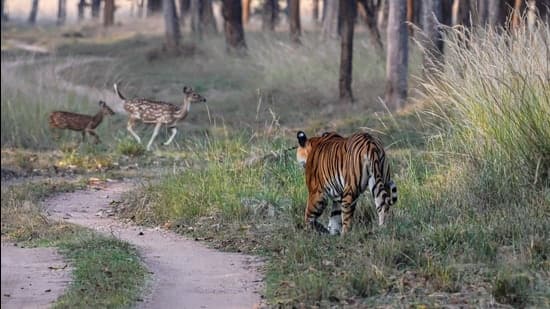
The world's critical life-support systems, including forests, rivers, and species, are deteriorating rapidly, overshadowed by geopolitical conflicts. Since 1970, global wildlife populations have fallen by more than two-thirds, and nearly a million species are threatened with extinction.
These ecological declines directly impact climate regulation, water cycles, food production, and health. Human activities have already altered over 70% of the Earth's ice-free land, leading to soil degradation and unpredictable water flows.
Conservation efforts focusing on "umbrella species"—those requiring vast, healthy ecosystems for survival—offer a promising strategy. Safeguarding large predators, mega-herbivores, and old-growth trees protects entire landscapes and their essential services, as demonstrated by India's tiger conservation.
Regions rich in biodiversity are increasingly becoming conflict zones, exacerbating environmental damage. This persistent conflict degrades ecosystems and societies, creating long-term trauma and increasing pandemic risks.
A new metric, the Global Survival Trauma Index (GSTI), is proposed to measure cumulative ecological and social damage, acting as an early warning system for breakdown.
Nations must embrace reciprocal ecological responsibility, recognizing that borderless issues like climate change and pathogen spread necessitate shared solutions. Protecting critical landscapes as no-conflict zones is vital for global stability and survival.
Ultimately, peace in the 21st century must be measured not only by ceasefires but by the health of our planet's life-support systems, ensuring a sustainable future for all generations.
